


In the dynamic landscape of material handling, counterbalance stackers play a pivotal role in enhancing efficiency and productivity. As a leading counterbalance stacker supplier, I am excited to delve into the various types of counterbalance stackers available in the market. This exploration will not only provide valuable insights for potential buyers but also showcase the diverse range of solutions we offer to meet different industrial needs.
Electric Counterbalance Stackers
Electric counterbalance stackers are a popular choice in modern warehouses and distribution centers. They are powered by electric batteries, which offer several advantages over their internal combustion counterparts. Firstly, electric stackers are environmentally friendly, producing zero emissions during operation. This makes them ideal for indoor use, where air quality is a concern. Secondly, they are quieter than diesel or gas-powered stackers, reducing noise pollution in the workplace.
One of the key features of electric counterbalance stackers is their precise control. The electric motors provide smooth acceleration and deceleration, allowing operators to handle loads with accuracy. Additionally, electric stackers often come with advanced features such as regenerative braking, which helps to extend the battery life.

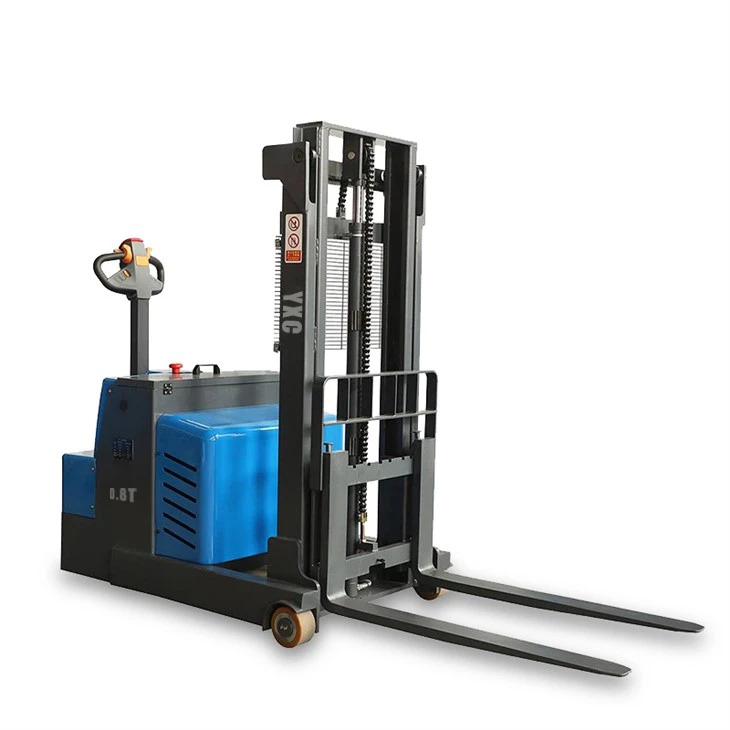
Our Counterbalance Pallet Stacker is a prime example of an electric counterbalance stacker. It is designed for easy maneuverability in tight spaces, making it suitable for narrow aisles. With a high lifting capacity and a long battery life, this stacker is a reliable choice for daily material handling tasks.
Diesel and Gasoline Counterbalance Stackers
Diesel and gasoline counterbalance stackers are known for their high power and durability. They are typically used in outdoor applications or in environments where heavy loads need to be lifted and transported over long distances. These stackers are powered by internal combustion engines, which provide the necessary torque to handle heavy loads.
One of the main advantages of diesel and gasoline stackers is their ability to operate continuously without the need for frequent recharging. They are also more powerful than electric stackers, making them suitable for heavy-duty applications. However, they do produce emissions and are louder than electric stackers, which may limit their use in indoor environments.
Our 2 Ton CounterBalance forklift is a robust diesel-powered counterbalance stacker. It is built to withstand the rigors of outdoor use and can handle heavy loads with ease. With a high lifting height and a stable design, this stacker is a great choice for construction sites, ports, and other outdoor applications.
Walkie Counterbalanced Stackers
Walkie counterbalanced stackers are a versatile option for material handling. They are designed to be operated while the operator walks alongside the stacker, providing greater flexibility and maneuverability. These stackers are typically used in smaller warehouses or in applications where the operator needs to move quickly between different locations.
One of the key advantages of walkie counterbalanced stackers is their compact size. They can easily navigate through narrow aisles and tight spaces, making them ideal for facilities with limited floor space. Additionally, they are easy to operate, requiring minimal training for the operator.
Our Walkie Counterbalanced Stacker is a lightweight and agile stacker. It is equipped with a powerful electric motor and a comfortable operating handle, allowing the operator to work efficiently for extended periods. With a high lifting capacity and a long battery life, this stacker is a popular choice for small to medium-sized businesses.
Semi-Electric Counterbalance Stackers
Semi-electric counterbalance stackers combine the features of electric and manual stackers. They are powered by an electric motor for lifting and lowering the forks, but the operator needs to manually push or pull the stacker to move it around. These stackers are a cost-effective option for businesses that do not require a fully electric stacker but still want the benefits of electric lifting.
One of the main advantages of semi-electric counterbalance stackers is their affordability. They are typically less expensive than fully electric stackers, making them a great choice for budget-conscious businesses. Additionally, they are easy to maintain, as they have fewer electrical components.
Considerations When Choosing a Counterbalance Stacker
When choosing a counterbalance stacker, there are several factors to consider. Firstly, you need to determine the lifting capacity and height requirements of your application. This will help you select a stacker that can handle the loads you need to lift and reach the required height.
Secondly, you need to consider the operating environment. If you will be using the stacker indoors, an electric stacker may be the best choice due to its low emissions and quiet operation. If you will be using the stacker outdoors or in a heavy-duty application, a diesel or gasoline stacker may be more suitable.
Thirdly, you need to consider the maneuverability of the stacker. If you have narrow aisles or tight spaces in your facility, a walkie counterbalanced stacker or a compact electric stacker may be the best option.
Finally, you need to consider the cost of the stacker, including the purchase price, maintenance costs, and operating costs. It is important to choose a stacker that offers a good balance between performance and cost.
Conclusion
In conclusion, the market offers a wide range of counterbalance stackers to meet different industrial needs. Whether you need an electric stacker for indoor use, a diesel or gasoline stacker for outdoor applications, a walkie counterbalanced stacker for maneuverability, or a semi-electric stacker for cost-effectiveness, there is a solution available for you.
As a counterbalance stacker supplier, we are committed to providing our customers with high-quality stackers that are reliable, efficient, and easy to operate. Our team of experts can help you choose the right stacker for your specific needs and provide you with the support and service you need to keep your stacker running smoothly.
If you are interested in learning more about our counterbalance stackers or would like to discuss your material handling requirements, please do not hesitate to contact us. We look forward to the opportunity to work with you and help you find the perfect solution for your business.
References
- Material Handling Industry of America (MHIA). (2023). Counterbalance Stackers: A Guide to Selection and Use.
- Industrial Truck Association (ITA). (2023). Counterbalance Forklift Trucks: Safety and Operation.