


The speed control mechanism of a Powered Pallet Stacker is a crucial aspect that determines its performance, safety, and efficiency in various industrial settings. As a leading supplier of Powered Pallet Stackers, we understand the significance of this mechanism and are committed to providing high - quality solutions with advanced speed control features.
Basic Components of the Speed Control Mechanism
The speed control mechanism of a Powered Pallet Stacker consists of several key components. The first is the motor controller. This device is responsible for regulating the electrical power supplied to the motor. It can adjust the voltage, current, and frequency of the electrical signal sent to the motor, thereby controlling the motor's speed. For example, in our 1 Ton Double Column Mini Electric Stacker Truck, the motor controller is designed to be highly responsive, allowing for precise speed adjustments according to the operator's needs.
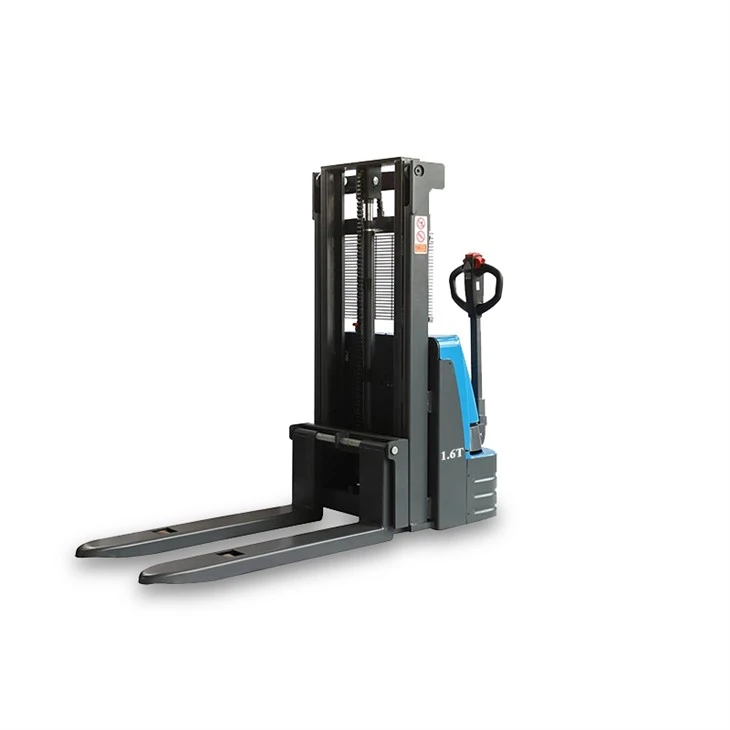
Another important component is the throttle or speed control pedal. This is the interface through which the operator directly controls the speed of the stacker. When the operator presses the pedal, it sends a signal to the motor controller, indicating the desired speed. The pedal can be designed in different ways, such as a simple analog pedal or a more advanced digital pedal with multiple levels of sensitivity. In our 1.5 Ton Electric Stacker Truck, the speed control pedal is ergonomically designed to provide a comfortable and intuitive operation experience.

Feedback Systems for Precise Speed Control
To ensure precise speed control, many Powered Pallet Stackers are equipped with feedback systems. One common type of feedback system is the encoder. An encoder is a device that measures the rotational speed and position of the motor shaft. It sends this information back to the motor controller, which can then adjust the power supply to the motor to maintain the desired speed. This closed - loop control system helps to compensate for any external factors that may affect the speed, such as changes in load or terrain.
For instance, when the stacker is carrying a heavy load, the motor may experience a slowdown due to increased resistance. The encoder detects this change in speed and sends a signal to the motor controller, which then increases the power supplied to the motor to bring the speed back to the set level. This feedback - based speed control mechanism is essential for maintaining consistent performance and preventing damage to the stacker and its components.
Safety - Related Speed Control Features
Safety is a top priority in the design of Powered Pallet Stackers, and the speed control mechanism plays a vital role in ensuring safe operation. One important safety feature is the speed limit function. This function allows the operator or the administrator to set a maximum speed for the stacker. Once the stacker reaches this speed limit, the motor controller will automatically reduce the power supplied to the motor to prevent the stacker from exceeding the set speed.
In addition, some stackers are equipped with anti - slip and anti - rollback features. When the stacker is on an inclined surface, these features can adjust the speed and braking force to prevent the stacker from slipping or rolling backward. For example, our Walking Pallet Stacker is designed with advanced anti - slip technology, which uses sensors to detect the inclination of the surface and adjust the speed and braking accordingly.
Impact of Speed Control on Productivity
The speed control mechanism also has a significant impact on the productivity of the stacker. A well - designed speed control system allows the operator to quickly and efficiently move the stacker between different locations in the warehouse or industrial facility. For example, when the stacker is moving in an open area with no obstacles, the operator can set a higher speed to reduce the travel time. On the other hand, when the stacker is approaching a rack or a loading area, the operator can slow down the stacker to ensure accurate positioning.
Moreover, the ability to control the speed precisely during the lifting and lowering operations can also improve productivity. The stacker can be adjusted to lift or lower the load at an optimal speed, which not only saves time but also reduces the risk of damage to the load.
Maintenance and Troubleshooting of the Speed Control Mechanism
Proper maintenance of the speed control mechanism is essential to ensure its long - term performance. Regular inspections should be carried out to check the condition of the motor controller, throttle pedal, encoder, and other components. Any signs of wear or damage should be addressed immediately to prevent further problems.
In case of a malfunction in the speed control mechanism, troubleshooting steps should be followed. First, the operator should check the power supply and connections to ensure that there are no loose wires or power interruptions. If the problem persists, the motor controller and other components may need to be tested using specialized diagnostic tools. As a supplier, we provide comprehensive maintenance and troubleshooting support to our customers to ensure that their stackers are always in good working condition.
Future Developments in Speed Control Technology
The field of speed control technology for Powered Pallet Stackers is constantly evolving. In the future, we can expect to see more advanced and intelligent speed control systems. For example, the integration of artificial intelligence and machine learning algorithms can enable the stacker to automatically adjust its speed based on the environment, load, and operator behavior. This can further improve the efficiency and safety of the stacker.
In addition, the development of wireless communication technology may allow for remote monitoring and control of the speed control mechanism. Operators or administrators can monitor the speed and performance of the stacker in real - time and make adjustments as needed, even from a remote location.
Conclusion
The speed control mechanism of a Powered Pallet Stacker is a complex and essential part of its design. It affects the performance, safety, and productivity of the stacker in various ways. As a supplier, we are dedicated to providing high - quality stackers with advanced speed control features. Our stackers, such as the 1 Ton Double Column Mini Electric Stacker Truck, 1.5 Ton Electric Stacker Truck, and Walking Pallet Stacker, are designed to meet the diverse needs of our customers in different industrial applications.
If you are interested in our Powered Pallet Stackers or have any questions about the speed control mechanism, please feel free to contact us for more information and to discuss your specific requirements. We look forward to the opportunity to work with you and provide you with the best solutions for your material handling needs.
References
- "Material Handling Equipment Handbook" - A comprehensive guide on the design and operation of various material handling equipment, including Powered Pallet Stackers.
- "Industrial Automation and Control Systems" - A technical reference book that covers the principles and applications of automation and control systems in industrial settings, relevant to the speed control mechanism of stackers.
- Manufacturer's technical documentation for Powered Pallet Stackers, which provides detailed information on the speed control features and specifications of different models.