


The ground clearance of an electric stacker truck is a crucial specification that significantly impacts its performance, versatility, and suitability for various work environments. As a leading supplier of electric stacker trucks, we understand the importance of this parameter and its implications for our customers. In this blog post, we will delve into the concept of ground clearance, its significance, and how it relates to our range of electric stacker trucks.
Understanding Ground Clearance
Ground clearance refers to the vertical distance between the lowest point of the electric stacker truck's chassis (excluding the wheels) and the ground surface. It is measured when the truck is in a static position, unloaded, and on a flat, level surface. This measurement is essential as it determines the truck's ability to navigate over obstacles, uneven terrain, and floor irregularities without causing damage to the vehicle or its components.
Significance of Ground Clearance
1. Obstacle Navigation
A sufficient ground clearance allows the electric stacker truck to move smoothly over small obstacles such as floor joints, cables, and debris. For example, in a warehouse with a busy forklift traffic area, there may be small bumps or debris on the floor. A stacker truck with adequate ground clearance can easily pass over these obstacles without getting stuck or causing damage to the undercarriage.
2. Uneven Surfaces
In some industrial settings, the floors may not be perfectly flat. Outdoor areas, construction sites, or older warehouses may have uneven surfaces. A higher ground clearance enables the electric stacker truck to operate on these surfaces without scraping the chassis or experiencing excessive vibrations, which can affect the stability and performance of the truck.
3. Protection of Components
The ground clearance also plays a vital role in protecting the sensitive components of the electric stacker truck, such as the battery, hydraulic system, and control unit. By keeping these components at a safe distance from the ground, the risk of damage from impacts, dirt, and moisture is reduced. This helps to extend the lifespan of the truck and minimize maintenance costs.

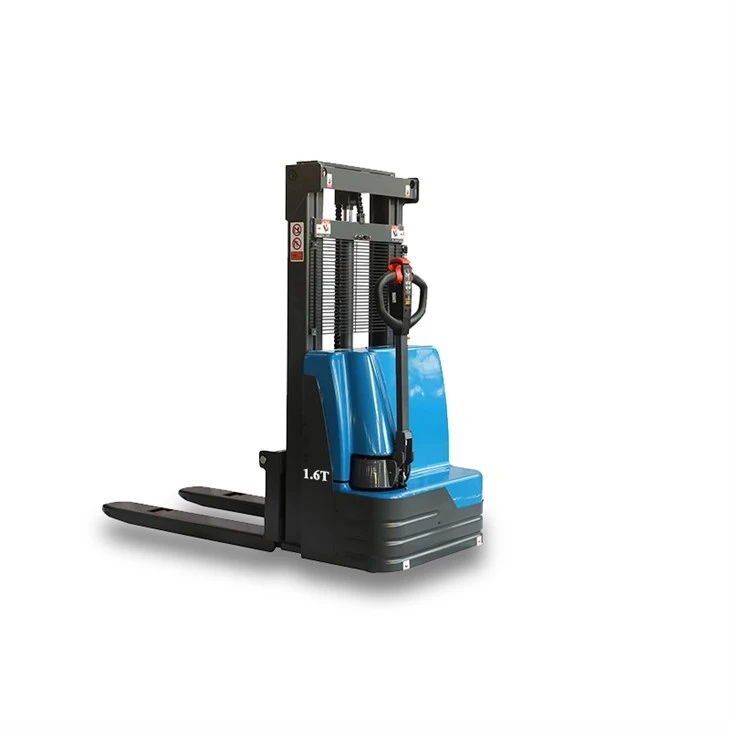
Ground Clearance in Our Electric Stacker Trucks
We offer a wide range of electric stacker trucks with different ground clearances to meet the diverse needs of our customers. Our 1.2 Ton Double Column Mini Electric Stacker Truck is designed for indoor use in warehouses and distribution centers with relatively flat floors. It has a moderate ground clearance that allows it to navigate over small obstacles while maintaining stability.
On the other hand, our Walking Pallet Stacker and Walk Behind Pallet Stacker are suitable for a variety of applications, including outdoor use on slightly uneven surfaces. These models feature a higher ground clearance to ensure smooth operation in different environments.
Factors Affecting Ground Clearance
1. Load Capacity
The load capacity of the electric stacker truck can affect its ground clearance. When the truck is loaded, the additional weight can cause the chassis to lower slightly, reducing the ground clearance. It is important to consider the maximum load capacity of the truck and ensure that the ground clearance is still sufficient even when fully loaded.
2. Wheel Size
The size of the wheels also plays a role in determining the ground clearance. Larger wheels generally provide a higher ground clearance, as they can roll over obstacles more easily. However, larger wheels may also increase the overall height and weight of the truck, which can affect its maneuverability and energy consumption.
3. Design of the Chassis
The design of the chassis can impact the ground clearance. A well-designed chassis can optimize the ground clearance while maintaining the structural integrity and stability of the truck. Our engineers carefully consider these factors when designing our electric stacker trucks to ensure the best balance between ground clearance, performance, and functionality.
Choosing the Right Ground Clearance for Your Application
When selecting an electric stacker truck, it is important to consider the specific requirements of your application. Here are some factors to keep in mind:
1. Work Environment
If you operate in a warehouse with a smooth, flat floor, a stacker truck with a moderate ground clearance may be sufficient. However, if you need to operate on uneven surfaces or outdoors, a truck with a higher ground clearance is recommended.
2. Obstacle Frequency
If your work area has a high frequency of small obstacles, such as cables or debris, a stacker truck with a higher ground clearance will be more suitable. This will help to prevent the truck from getting stuck and ensure smooth operation.
3. Load Requirements
Consider the maximum load capacity that you need to handle. Make sure that the ground clearance of the truck is still adequate when fully loaded to avoid any issues with scraping or damage to the undercarriage.
Conclusion
The ground clearance of an electric stacker truck is a critical factor that can significantly impact its performance and suitability for different applications. As a supplier of electric stacker trucks, we offer a range of models with varying ground clearances to meet the diverse needs of our customers. By understanding the concept of ground clearance and considering the specific requirements of your application, you can choose the right electric stacker truck that will provide optimal performance and reliability.
If you are interested in learning more about our electric stacker trucks or need assistance in choosing the right model for your application, please do not hesitate to contact us. Our team of experts is ready to help you make an informed decision and ensure that you get the best solution for your material handling needs.
References
- Industrial Truck Association (ITA). (Year). Electric Stacker Truck Standards and Guidelines.
- Material Handling Industry of America (MHIA). (Year). Best Practices for Electric Stacker Truck Operation.