


Hey there! As a supplier of solid tires, I've been getting a lot of questions lately about whether solid tires have a different load - distribution characteristic. Well, let's dive right into it.
First off, what are solid tires? Unlike pneumatic tires that are filled with air, solid tires are made of solid rubber compounds. They're commonly used in industrial applications, forklifts, and some electric vehicles. One of the main reasons people opt for solid tires is their durability. They're puncture - proof, which means less downtime due to flat tires.
Now, let's talk about load distribution. In pneumatic tires, the air inside acts as a cushion. When a load is applied, the air pressure redistributes evenly across the tire's contact patch with the ground. This helps in spreading the weight of the vehicle or the load it's carrying over a larger area. For example, if you're driving a truck with pneumatic tires on a bumpy road, the air in the tires can adjust to the uneven surface, ensuring that the load is distributed as evenly as possible.
On the other hand, solid tires have a different way of handling loads. Since they don't have air, the load distribution is mainly dependent on the design and material of the tire. Solid tires are typically stiffer than pneumatic ones. When a load is placed on a solid tire, the weight is concentrated more directly on the contact area between the tire and the ground.

Let's take a forklift as an example. Forklifts often use solid tires because they need to carry heavy loads. When a forklift picks up a pallet of goods, the solid tire has to support that weight. The load is distributed from the forklift's axle through the tire to the ground. The stiffness of the solid tire means that it doesn't deform as much as a pneumatic tire under load. This can be both an advantage and a disadvantage.
One advantage is that solid tires can handle heavier loads without the risk of blowouts or sudden deflation. They're more reliable in high - load situations. For instance, in a busy warehouse where forklifts are constantly moving heavy pallets, solid tires can keep up with the demand. However, the disadvantage is that the concentrated load on the contact area can lead to more wear and tear on the tire. Over time, this can cause the tire to develop flat spots or uneven wear patterns.
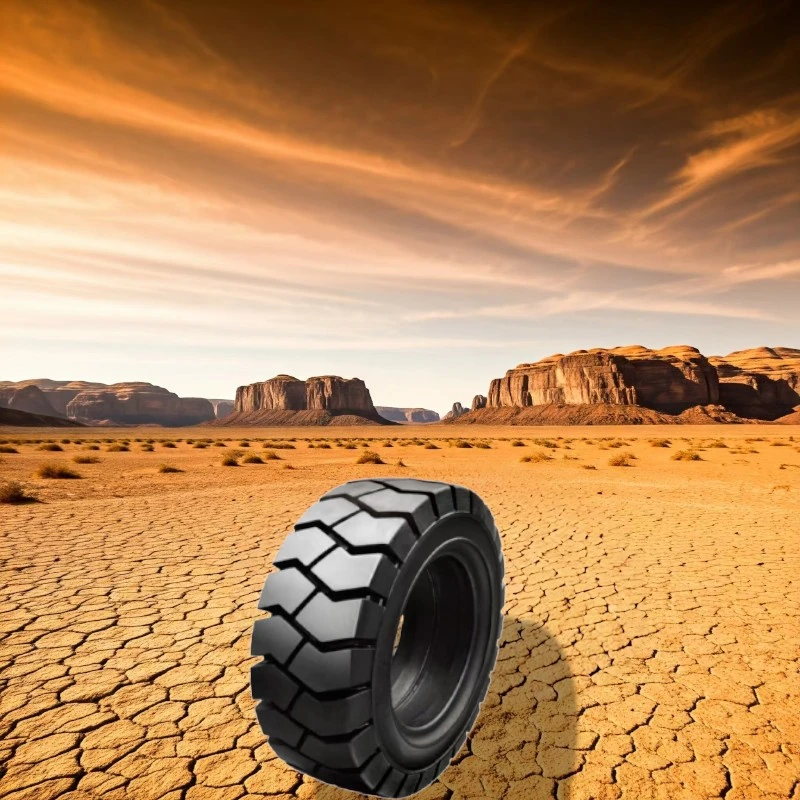
Another factor that affects load distribution in solid tires is the type of tread pattern. Some solid tires have a smooth tread, while others have a more aggressive pattern. A smooth - tread solid tire may distribute the load more evenly in a straight - line motion. But when it comes to turning or navigating corners, the load distribution can become uneven. An aggressive tread pattern, on the other hand, can provide better traction but may also cause the load to be distributed in a more complex way.
Let's also consider the different types of solid tires we offer. We have Best Low Rolling Resistance Tires for Electric Cars. These tires are designed to reduce the energy consumption of electric vehicles. The load - distribution characteristic of these tires is optimized to ensure that the vehicle can move smoothly while using less power. The low - rolling - resistance design helps in evenly distributing the load, which in turn reduces the friction between the tire and the road.
Our Tires with Raised Rim Protector are another great option. The raised rim protector not only protects the rim of the wheel but also affects the load - distribution. It can help in preventing the tire from shifting on the rim under heavy loads, ensuring that the load is distributed more stably.
We also have Light - duty Tires. These are suitable for applications where the load is relatively small. The load - distribution in light - duty solid tires is different from heavy - duty ones. They're designed to be more flexible and can adapt to lighter loads more easily.
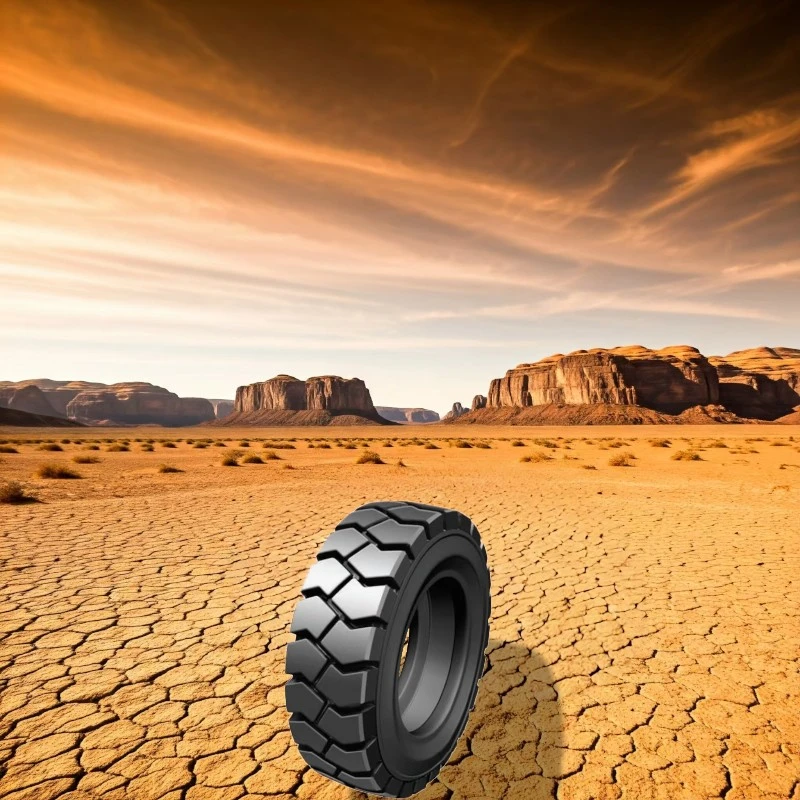
In industrial settings, the load - distribution characteristic of solid tires can have a significant impact on the performance of the equipment. For example, if a forklift's tires don't distribute the load properly, it can lead to instability. This can be dangerous, especially when the forklift is carrying a heavy load at a high level.
To understand the load - distribution characteristic of solid tires better, we've conducted a series of tests. We used different weights and applied them to our solid tires in various conditions. We found that the load - distribution can vary depending on the speed of the vehicle, the surface it's driving on, and the type of load. For example, when driving on a rough surface, the load on the solid tire can shift more abruptly compared to a smooth surface.

When it comes to choosing the right solid tire for your application, it's important to consider the load - distribution characteristic. If you're using the tire in a high - load, high - speed environment, you'll need a tire that can distribute the load evenly and handle the stress. On the other hand, if it's for a light - duty application, a more flexible tire with a different load - distribution pattern may be more suitable.
So, do solid tires have a different load - distribution characteristic? Absolutely! They have a unique way of handling loads compared to pneumatic tires. And as a solid - tire supplier, we're constantly working on improving our tire designs to optimize load distribution.
If you're in the market for solid tires and want to learn more about how our products can meet your load - distribution needs, don't hesitate to reach out. We're here to help you find the perfect tire for your specific application. Whether you're running an industrial fleet or need tires for your electric vehicle, we've got you covered. Let's start a conversation about your requirements and see how our solid tires can make a difference in your operations.
References
- Tire Technology Handbook, Various Authors
- Industrial Tire Research Reports, Industry - specific Publications