


Hey there! I'm in the business of supplying electric tractors, and I often get asked this question: Do electric tractors require less training to operate than diesel tractors? Let's dig into this topic and find out.
First off, let's talk about the basics of these two types of tractors. Diesel tractors have been around for ages. They're like the old - school workhorses of the farming and industrial world. They run on diesel fuel, which gives them a lot of power. But with that power comes a bit of complexity. Diesel engines have a lot of moving parts, like pistons, valves, and fuel injection systems. These parts need to be understood by the operator to ensure proper maintenance and operation.
On the other hand, electric tractors are the new kids on the block. They're powered by electricity, usually from batteries. The technology behind electric tractors is much simpler in comparison. There are fewer moving parts in an electric motor. Instead of a complex fuel injection system, you've got a battery and a controller that manages the flow of electricity to the motor.
When it comes to starting up, diesel tractors can be a bit finicky. In cold weather, they might need to be pre - heated, and there's a specific sequence to follow when starting the engine. You've got to turn the key, wait for the glow plugs to warm up (if it's cold), and then start the engine. If you don't do it right, you might flood the engine or have trouble getting it started at all.
Electric tractors, however, are super easy to start. You just turn on a switch, and you're good to go. There's no need to worry about pre - heating or a complicated starting sequence. This simplicity means that operators can get up and running on an electric tractor much faster.
Now, let's look at the controls. Diesel tractors often have a lot of levers and pedals for things like gear shifting, clutch operation, and throttle control. The gearbox on a diesel tractor can have multiple gears, and learning how to shift smoothly takes time and practice. You've got to coordinate the clutch and the gear shifter just right to avoid jerky movements or stalling the engine.
Electric tractors, on the contrary, usually have fewer controls. Many electric tractors have a single - speed transmission or a very simple multi - speed system. There's no clutch to worry about, and the throttle is often just a pedal that controls the speed directly. This makes the learning curve for operating an electric tractor much shorter.
Another aspect to consider is the noise and vibration. Diesel tractors are known for being noisy and vibrating a lot. This can be distracting for new operators, and it also makes it harder to focus on learning the controls. The noise can even cause hearing damage over time if proper protection isn't worn.
Electric tractors are quiet and have very little vibration. This creates a more comfortable and less distracting environment for operators. They can focus better on learning how to drive the tractor and perform tasks.
Safety is also an important factor. Diesel tractors use flammable fuel, which poses a fire risk. Operators need to be trained on how to handle diesel fuel safely, including refueling procedures and storage. There's also the risk of exhaust fumes, which can be harmful if inhaled in large quantities.
Electric tractors don't have these risks. There's no flammable fuel, and they produce zero emissions at the point of use. This means that the training for electric tractors can focus more on the operation of the tractor itself rather than safety procedures related to fuel handling.
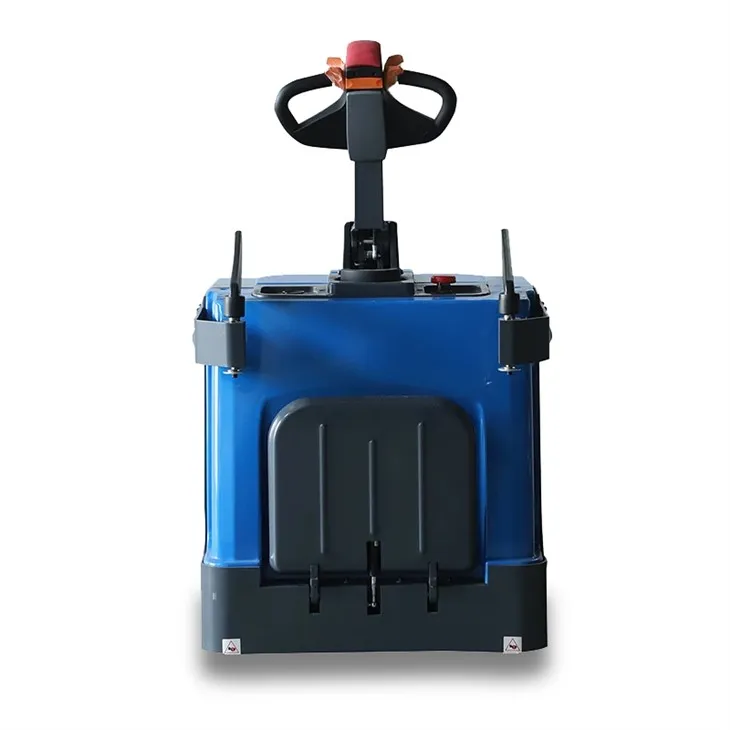
Let's take a look at some of the electric tractors we offer. We've got the Electric Small Tractor, which is perfect for small - scale operations. It's easy to maneuver and has all the simplicity of an electric tractor that I've been talking about. Then there's the 5 Ton Small Tractor, which is more powerful but still retains the ease of operation. And for those who need something a bit different, we have the 3 Ton Car Type Electric Tractor, with its unique design and user - friendly controls.
In terms of maintenance training, diesel tractors require a lot more knowledge. Operators need to know how to change the oil, filter, and spark plugs (in some cases). They also need to understand how to troubleshoot engine problems, which can be quite complex.
Electric tractors have much simpler maintenance requirements. You mainly need to know how to charge the battery and do basic checks on the electrical system. There's no need to deal with oil changes or complex engine repairs. This means that the training for maintaining an electric tractor is also much less intensive.
So, to answer the question, yes, electric tractors generally require less training to operate than diesel tractors. The simplicity of their design, starting procedures, controls, and maintenance all contribute to a shorter learning curve.
If you're in the market for a tractor and are worried about the training time for your operators, an electric tractor might be the way to go. Not only will it save you time on training, but it's also more environmentally friendly and often more cost - effective in the long run.
If you're interested in learning more about our electric tractors or want to start a purchase negotiation, don't hesitate to reach out. We're here to help you find the perfect tractor for your needs.
References

- Agricultural Machinery Handbook: Covers general knowledge about different types of tractors.
- Electric Vehicle Technology Journals: Provide in - depth information on electric tractor technology.