


Can a heavy duty excavator be used for demolition work? That's a question I get asked a lot as a supplier of Heavy Duty Excavators. And the short answer is yes! But let's dig a little deeper into this topic.
First off, what exactly is a heavy duty excavator? Well, it's a powerful piece of machinery designed to handle tough jobs. These bad boys are built with strong frames, high - powered engines, and heavy - duty components. They can come in different types, like the Wheel Excavator Digger which offers good mobility on wheels, or the Small Wheeled Excavator for more compact and maneuverable operations. Of course, our star product, the Heavy Duty Excavator, is the big gun when it comes to power and performance.
Now, let's talk about demolition work. Demolition is all about taking down structures, whether it's an old building, a concrete wall, or a bridge. It requires a machine that can deliver a lot of force and has the right attachments to get the job done.
One of the main reasons a heavy duty excavator is great for demolition is its power. These machines are equipped with large engines that can generate a massive amount of torque. This torque is transferred to the hydraulic system, which powers the boom, arm, and bucket. With this kind of power, the excavator can easily break through concrete, brick, and other building materials.
For example, when demolishing a concrete wall, the heavy duty excavator can use a hydraulic breaker attachment. The breaker is like a giant jackhammer that pounds away at the concrete, breaking it into smaller pieces. The excavator's operator can control the breaker with precision, targeting specific areas of the wall to bring it down efficiently.
Another advantage of using a heavy duty excavator for demolition is its versatility. In addition to the hydraulic breaker, there are other attachments available that can be used for different types of demolition tasks. For instance, a grapple attachment can be used to pick up and move large chunks of debris. This is especially useful when clearing a demolition site.
The long reach of the excavator's boom and arm is also a big plus. It allows the machine to access hard - to - reach areas of a structure. You don't have to get too close to the building, which can be dangerous during demolition. The operator can stand at a safe distance and still be able to reach all parts of the structure.
Let's not forget about safety. Heavy duty excavators are designed with safety features to protect the operator. These features include reinforced cabs, roll - over protection systems (ROPS), and falling object protection systems (FOPS). When working in a demolition site, where there are a lot of hazards like flying debris and unstable structures, these safety features are crucial.
However, using a heavy duty excavator for demolition isn't without its challenges. One of the main challenges is the weight of the machine. Heavy duty excavators are, well, heavy. This means that they need a stable surface to operate on. If the ground is soft or uneven, the excavator can tip over, which is extremely dangerous. So, before starting any demolition work, it's important to assess the ground conditions and make sure they are suitable for the machine.
Another challenge is the noise and vibration. Demolition work is noisy, and the hydraulic breaker on an excavator can be really loud. This can be a problem, especially if the demolition site is in a residential area. There are also regulations regarding noise pollution that need to be followed. Vibration from the machine can also cause damage to nearby structures. So, it's important to take measures to reduce noise and vibration, such as using noise - reducing attachments and proper operating techniques.
In terms of maintenance, heavy duty excavators used for demolition need regular upkeep. The constant pounding and stress of demolition work can take a toll on the machine's components. The hydraulic system, in particular, needs to be checked regularly for leaks and proper functioning. The attachments also need to be inspected and maintained to ensure they are in good working condition.
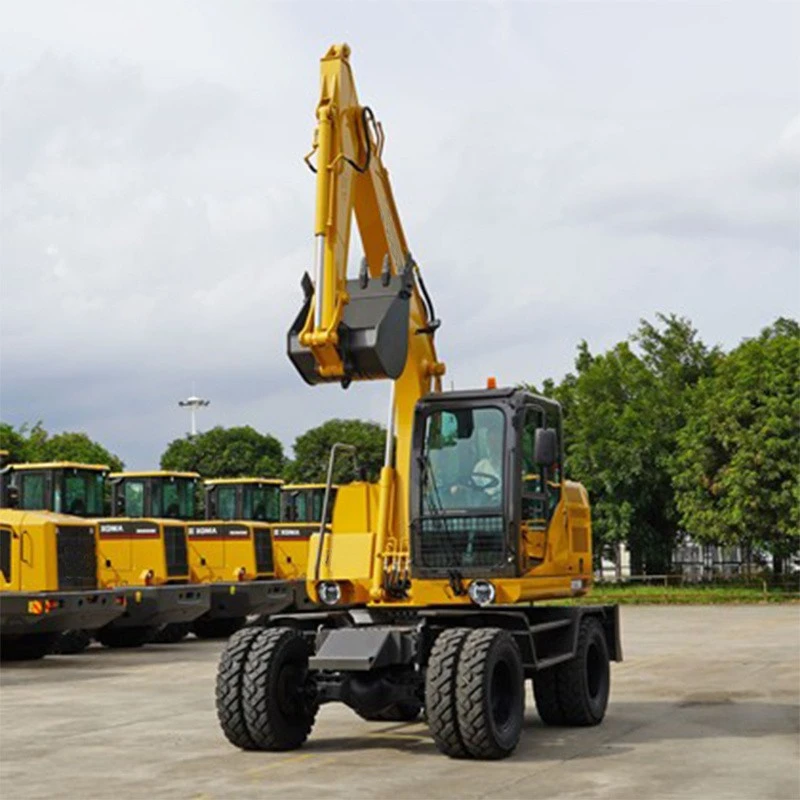

So, if you're in the demolition business, a heavy duty excavator can be a valuable asset. It can save you time and money by getting the job done more efficiently. And as a supplier, we offer a range of heavy duty excavators that are built to last. Our machines are made with high - quality materials and are backed by a team of experts who can provide support and maintenance services.
If you're interested in learning more about how our heavy duty excavators can benefit your demolition projects, don't hesitate to get in touch. We're here to answer all your questions and help you find the right machine for your needs. Whether you're a small - scale demolition contractor or a large construction company, we've got the equipment to meet your requirements.
In conclusion, a heavy duty excavator is definitely a great choice for demolition work. Its power, versatility, and safety features make it well - suited for taking down structures. While there are some challenges associated with using it, with proper planning and maintenance, these can be overcome. So, if you're in the market for a reliable machine for your demolition projects, give us a shout. We're confident that our heavy duty excavators will exceed your expectations.
References:
- General knowledge of heavy equipment operation and demolition work.
- Manufacturer's specifications and guidelines for heavy duty excavators.