


When it comes to optimizing storage and retrieval operations in a narrow - aisle warehouse, the choice between a reach truck and a narrow - aisle forklift is crucial. As a reach truck supplier, I have witnessed firsthand the diverse needs of warehouse operators and understand the significance of making the right equipment selection. In this blog, I will delve into the characteristics, advantages, and limitations of both reach trucks and narrow - aisle forklifts to help you determine which is more suitable for your narrow - aisle warehouse.
Understanding Reach Trucks
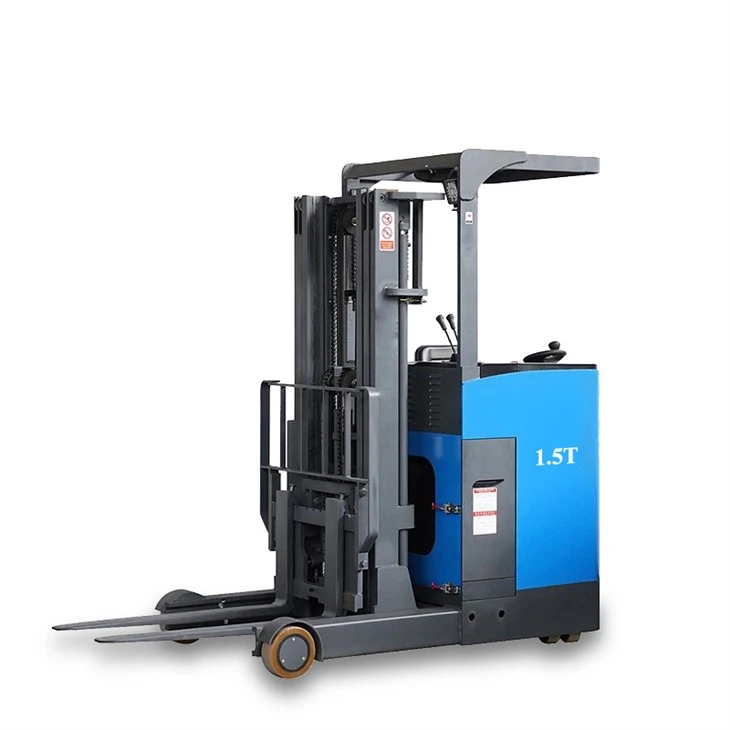
Reach trucks are specifically designed for high - density storage in narrow aisles. They are equipped with a unique mast design that allows the forks to “reach” forward beyond the outriggers, enabling them to access pallets stored in racking systems. This feature is particularly useful in warehouses where space is limited, as it allows for closer rack spacing and increased storage capacity.
One of the key advantages of reach trucks is their maneuverability. With a relatively small turning radius, reach trucks can navigate through narrow aisles with ease, making them ideal for warehouses with tight spaces. Additionally, reach trucks are available in various configurations, including stand - on and sit - down models, to suit different operator preferences and application requirements.
For example, our 1.5 Electric Reach Truck is a popular choice among warehouse operators. It offers a high level of performance and efficiency, with a maximum lifting capacity of 1.5 tons and a lifting height of up to [X] meters. The electric power source ensures quiet operation and zero emissions, making it suitable for indoor use.
Another option is our 2 Ton Stand On Electric Reach. This model is designed for operators who prefer a stand - on position, which provides better visibility and allows for quick entry and exit from the truck. With a 2 - ton lifting capacity, it can handle heavier loads, making it suitable for a wide range of applications.
Our Reach Truck 1.2 Ton is also a great choice for smaller warehouses or those with lighter load requirements. It offers a compact design and excellent maneuverability, making it easy to operate in narrow aisles.
Advantages of Reach Trucks in Narrow - Aisle Warehouses
- High - Density Storage: Reach trucks can access pallets in deep - reach racking systems, allowing for more pallets to be stored in a given area. This is especially beneficial for warehouses with limited floor space, as it maximizes storage capacity without the need for additional expansion.
- Maneuverability: As mentioned earlier, reach trucks have a small turning radius, which enables them to navigate through narrow aisles with ease. This reduces the time and effort required to move pallets, increasing overall productivity.
- Precision Handling: Reach trucks are equipped with advanced control systems that allow for precise positioning of the forks. This is essential for accurate pallet placement and retrieval, minimizing the risk of damage to goods and racking systems.
- Operator Comfort: Many reach trucks are designed with operator comfort in mind. Features such as adjustable seats, ergonomic controls, and good visibility contribute to a more comfortable working environment, reducing operator fatigue and increasing productivity.
Understanding Narrow - Aisle Forklifts
Narrow - aisle forklifts, also known as very narrow aisle (VNA) forklifts, are another option for narrow - aisle warehouses. These forklifts are designed to operate in aisles as narrow as [X] inches, using a variety of technologies such as guided systems and articulated masts.
Narrow - aisle forklifts typically offer high lifting heights, allowing for the storage of pallets in tall racking systems. They are often used in warehouses with high - bay storage requirements, where maximizing vertical space is essential.
Advantages of Narrow - Aisle Forklifts in Narrow - Aisle Warehouses
- Maximum Vertical Space Utilization: Narrow - aisle forklifts can reach greater heights than reach trucks, enabling warehouses to take advantage of vertical space and increase storage capacity. This is particularly useful for industries with high - volume storage needs, such as the food and beverage and pharmaceutical industries.
- Guided Systems: Many narrow - aisle forklifts are equipped with guided systems, such as wire - guided or laser - guided systems. These systems ensure accurate positioning of the forklift in the aisle, reducing the risk of collisions and improving overall safety.
- High - Speed Operation: Narrow - aisle forklifts are designed for high - speed operation, allowing for faster pallet handling and increased throughput. This is beneficial for warehouses with high - volume operations, where time is of the essence.
Limitations of Narrow - Aisle Forklifts
- Higher Initial Cost: Narrow - aisle forklifts are generally more expensive than reach trucks, both in terms of purchase price and installation costs. The guided systems and advanced technologies used in these forklifts contribute to the higher cost.
- Limited Maneuverability in Non - Guided Areas: While narrow - aisle forklifts are highly maneuverable in guided aisles, they may have limited maneuverability in non - guided areas, such as loading docks or staging areas. This can require additional equipment or manual handling to move pallets in these areas.
- Specialized Training Requirements: Operating a narrow - aisle forklift requires specialized training, as the equipment is more complex than a traditional forklift. This can add to the overall cost of ownership, as additional training and certification may be required for operators.
Which is More Suitable?
The choice between a reach truck and a narrow - aisle forklift depends on several factors, including the specific requirements of your warehouse, the type of goods being stored, and your budget.
If your warehouse has relatively low to medium - height racking systems and requires frequent movement of pallets in narrow aisles, a reach truck may be the more suitable option. Reach trucks offer good maneuverability, versatility, and a lower initial cost. They are also easier to operate and require less specialized training compared to narrow - aisle forklifts.
On the other hand, if your warehouse has high - bay storage requirements and needs to maximize vertical space, a narrow - aisle forklift may be the better choice. Narrow - aisle forklifts can reach greater heights and are designed for high - speed operation, making them ideal for high - volume warehouses. However, they come with a higher initial cost and require specialized training.
Conclusion
In conclusion, both reach trucks and narrow - aisle forklifts have their own advantages and limitations when it comes to narrow - aisle warehouse operations. As a reach truck supplier, I believe that reach trucks offer a great balance of performance, maneuverability, and cost - effectiveness for many narrow - aisle warehouse applications. However, the final decision should be based on a thorough evaluation of your specific needs and requirements.
If you are considering investing in new equipment for your narrow - aisle warehouse, I encourage you to contact us for more information. Our team of experts can help you assess your needs, recommend the most suitable equipment, and provide you with a detailed quote. We are committed to providing high - quality reach trucks and excellent customer service to help you optimize your warehouse operations.

References
- [Warehouse Material Handling Equipment Guide]
- [Forklift Industry Standards and Best Practices]