


In the world of material handling, reach trucks are indispensable workhorses that streamline operations in warehouses and distribution centers. As a leading reach truck supplier, we understand the importance of choosing the right battery for these machines. The battery is not just a power source; it's a critical component that can significantly impact the performance, efficiency, and longevity of a reach truck. In this blog post, we'll explore the different types of batteries commonly used in reach trucks, their advantages and disadvantages, and how to select the best option for your specific needs.
Lead - Acid Batteries
Lead - acid batteries have been the traditional choice for reach trucks for many years. They are well - known for their reliability and relatively low cost.
Flooded Lead - Acid Batteries
Flooded lead - acid batteries are the most basic type. They consist of lead plates submerged in an electrolyte solution of sulfuric acid and water. One of the main advantages of flooded lead - acid batteries is their affordability. They are generally less expensive to purchase compared to other battery types.
However, they do have some drawbacks. These batteries require regular maintenance, including checking and topping up the electrolyte levels with distilled water. Over - watering or under - watering can lead to reduced battery life. Additionally, they produce hydrogen gas during charging, which requires proper ventilation to prevent the risk of explosion.
Valve - Regulated Lead - Acid (VRLA) Batteries
VRLA batteries are a more advanced form of lead - acid batteries. There are two subtypes: Absorbent Glass Mat (AGM) and Gel.
AGM batteries use a fiberglass mat to absorb the electrolyte, which eliminates the need for watering. They are spill - proof and can be installed in any orientation, making them more convenient for reach trucks. AGM batteries also have a faster charge rate compared to flooded lead - acid batteries and are less prone to sulfation, a common cause of battery failure.
Gel batteries, on the other hand, use a gel - like electrolyte. They are highly resistant to vibration and shock, which is beneficial in the rough environment of a warehouse. Gel batteries also have a long service life and can be deeply discharged without significant damage.
Despite their advantages, VRLA batteries are more expensive than flooded lead - acid batteries. They also require a specific charging profile, and using an incorrect charger can lead to premature failure.
Lithium - Ion Batteries
Lithium - ion batteries are a relatively new entrant in the reach truck market but are quickly gaining popularity.
Advantages of Lithium - Ion Batteries
One of the most significant advantages of lithium - ion batteries is their high energy density. This means they can store more energy in a smaller and lighter package compared to lead - acid batteries. As a result, reach trucks equipped with lithium - ion batteries can have a longer operating time between charges and may also be more maneuverable due to the reduced weight.
Lithium - ion batteries also have a much longer lifespan. They can withstand a greater number of charge - discharge cycles compared to lead - acid batteries. For example, a high - quality lithium - ion battery can last up to 5000 cycles, while a lead - acid battery may only last 1000 - 1500 cycles.
Another benefit is the fast - charging capability. Lithium - ion batteries can be charged much faster than lead - acid batteries, which reduces downtime and increases productivity. They also do not require equalization charging, which is a maintenance procedure for lead - acid batteries.
Disadvantages of Lithium - Ion Batteries
The main disadvantage of lithium - ion batteries is their high upfront cost. They are significantly more expensive to purchase than lead - acid batteries. However, when considering the long - term costs, including reduced maintenance and longer lifespan, the total cost of ownership may be comparable or even lower.
Lithium - ion batteries also require a sophisticated battery management system (BMS) to ensure safe operation. The BMS monitors the battery's temperature, voltage, and state of charge to prevent over - charging, over - discharging, and short - circuits.
Nickel - Metal Hydride (NiMH) Batteries
NiMH batteries are another option for reach trucks, although they are less commonly used compared to lead - acid and lithium - ion batteries.

Advantages of NiMH Batteries
NiMH batteries have a higher energy density than lead - acid batteries, which means they can provide more power in a smaller size. They are also more environmentally friendly than lead - acid batteries as they do not contain toxic lead or sulfuric acid.
NiMH batteries have a relatively long lifespan and can tolerate a wide range of operating temperatures. They are also less prone to the memory effect, a phenomenon where a battery loses its maximum charge capacity if it is repeatedly recharged before being fully discharged.
Disadvantages of NiMH Batteries
One of the main drawbacks of NiMH batteries is their self - discharge rate. They tend to lose their charge more quickly when not in use compared to other battery types. This means that if a reach truck is not used for an extended period, the battery may need to be recharged before use.
NiMH batteries are also more expensive than lead - acid batteries and have a lower energy density than lithium - ion batteries.
Selecting the Right Battery for Your Reach Truck
When choosing a battery for your reach truck, several factors need to be considered:
Operating Requirements
If your reach truck operates for long hours continuously, a lithium - ion battery may be the best choice due to its high energy density and fast - charging capabilities. For shorter - term operations or in a budget - constrained environment, lead - acid batteries may be more suitable.
Maintenance
If you prefer a low - maintenance option, VRLA or lithium - ion batteries are better choices as they require less maintenance compared to flooded lead - acid batteries.
Cost
While lithium - ion batteries have a high upfront cost, they may be more cost - effective in the long run due to their longer lifespan and lower maintenance requirements. Consider your budget and the total cost of ownership when making a decision.
Our Reach Truck Offerings
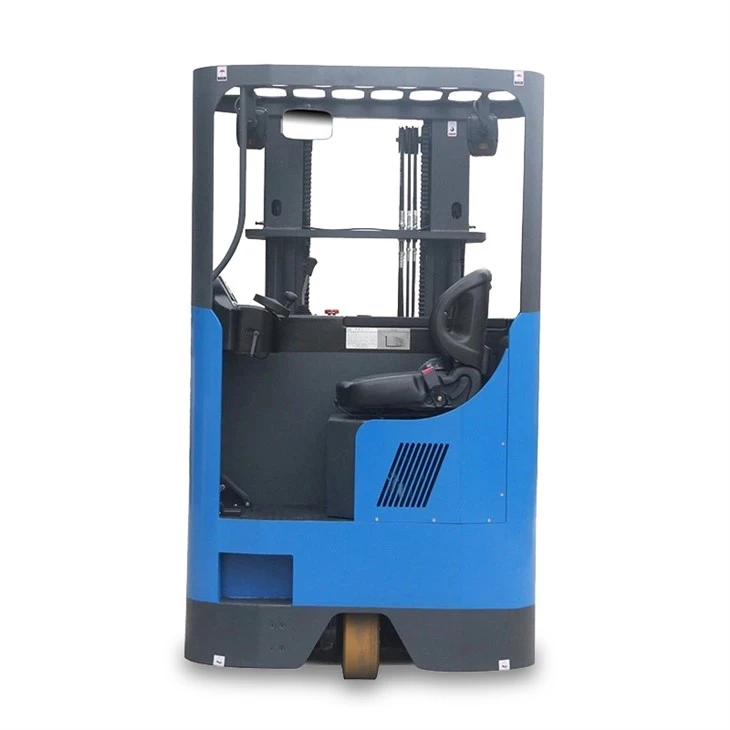
As a reach truck supplier, we offer a range of reach trucks with different battery options to meet your specific needs. Our Reach Truck 1.2 Ton is a compact and efficient option, suitable for smaller warehouses. It can be equipped with either lead - acid or lithium - ion batteries depending on your preference.
For medium - sized operations, our 1.5 Electric Reach Truck provides a good balance between capacity and maneuverability. You can choose the battery type that best fits your operating conditions.
If you need a heavy - duty reach truck, our 2 Ton Large Reach Electric Forklift is a powerful solution. It can handle large loads and is available with various battery configurations.
Contact Us for Purchase and Consultation
Selecting the right battery for your reach truck is crucial for optimizing performance and reducing costs. If you have any questions about our reach trucks or battery options, or if you're interested in purchasing a reach truck, please don't hesitate to contact us. Our team of experts is ready to assist you in making the best decision for your business.
References
- Linden, D., & Reddy, T. B. (2002). Handbook of Batteries. McGraw - Hill.
- Burke, A. F. (2007). Energy Storage for Hybrid Electric Vehicles. World Scientific.