


Hey there! As a wheel excavator supplier, I often get asked about the turning radius of these machines. It's a crucial factor that can make or break the efficiency of your construction or excavation project. So, let's dive right in and explore what the turning radius of a wheel excavator is all about.
First off, what exactly is the turning radius? Well, it's the smallest circle that a wheel excavator can turn within. This measurement is super important because it determines how maneuverable the machine is in tight spaces. Whether you're working on a crowded construction site, a narrow urban street, or a confined backyard, a smaller turning radius means the excavator can get the job done without having to make multiple, time - consuming turns.
There are two main types of turning radius we need to talk about: the outer turning radius and the inner turning radius. The outer turning radius is the distance from the center of the turning circle to the outermost point of the excavator as it makes a turn. This includes the boom, the bucket, and any other attachments. On the other hand, the inner turning radius is the distance from the center of the turning circle to the innermost point of the machine, usually the rear end or the tire on the inside of the turn.
The turning radius of a wheel excavator can vary widely depending on several factors. One of the biggest factors is the size of the machine. Larger wheel excavators typically have a larger turning radius because they have a longer wheelbase and bigger components. For example, a heavy - duty wheel excavator designed for large - scale construction projects might have an outer turning radius of 10 to 15 meters or more. This is because it needs to accommodate a large boom, a powerful engine, and a spacious operator's cab.
In contrast, smaller wheel excavators, like the Rubber Tire Mini Excavator, have a much smaller turning radius. These mini excavators are perfect for jobs in tight spaces, such as landscaping, small - scale demolition, or utility work. They can have an outer turning radius of as little as 3 to 5 meters, allowing them to navigate through narrow alleys and small yards with ease.
Another factor that affects the turning radius is the design of the machine. Some wheel excavators are designed with a special steering system that allows for a tighter turn. For instance, some models have a four - wheel steering system, which enables the front and rear wheels to turn in opposite directions. This significantly reduces the turning radius and makes the excavator more agile.
The type of tires also plays a role. Tires with a smaller diameter and a wider tread can provide better traction and a smaller turning radius. They allow the machine to pivot more easily, especially on soft or uneven ground.
Now, you might be wondering why the turning radius matters so much. Well, in the construction and excavation business, time is money. A wheel excavator with a smaller turning radius can complete tasks more quickly because it doesn't have to waste time making multiple turns to get into position. This means you can finish your projects faster and take on more jobs, increasing your overall profitability.
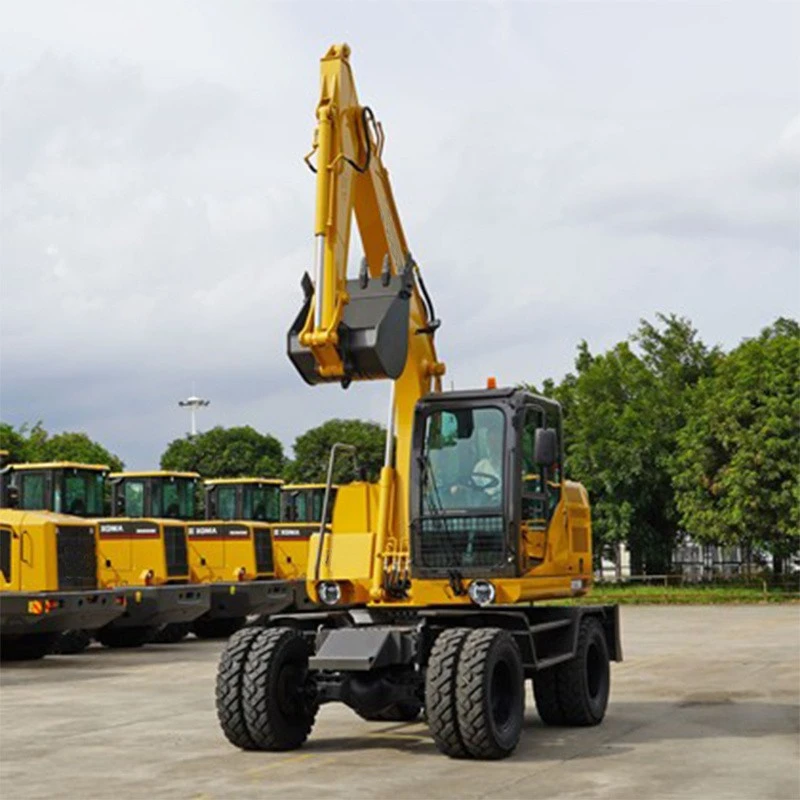

Let's say you're working on a site where there are a lot of obstacles, like buildings, trees, or other equipment. A wheel excavator with a large turning radius might struggle to maneuver around these obstacles, leading to delays and potential damage to the machine or the surrounding area. But if you have a machine with a smaller turning radius, like our Wheel Excavator Digger, you can easily navigate through the tight spaces and get the job done efficiently.
In addition, a smaller turning radius can also improve safety on the job site. When an excavator can turn easily, the operator has better control over the machine. This reduces the risk of accidents, such as collisions with other vehicles or structures.
If you're in the market for a wheel excavator, it's essential to consider the turning radius based on your specific needs. If you mostly work in large, open areas, a larger machine with a bigger turning radius might be suitable. However, if you frequently work in tight spaces, a smaller excavator with a tight turning radius is the way to go.
Our company offers a wide range of wheel excavators, each with different turning radii to meet your diverse needs. Whether you're looking for a Digging Wheel Excavator for heavy - duty digging or a mini excavator for light - duty tasks, we've got you covered.
If you're interested in learning more about our wheel excavators or want to discuss which model would be the best fit for your project, don't hesitate to reach out. We're here to help you make the right choice and ensure that you get the most out of your investment. Contact us today to start the conversation about your wheel excavator needs, and let's work together to find the perfect machine for your business.
References
- Construction Equipment Handbook, various editions
- Manufacturer's specifications for wheel excavators