


Hey there! As a supplier of Powered Pallet Stackers, I often get asked about the turning radius of these nifty machines. So, let's dig into what the turning radius of a Powered Pallet Stacker is, why it matters, and how it can impact your warehouse operations.
What is the Turning Radius?
The turning radius of a Powered Pallet Stacker is the minimum space it needs to make a complete turn. Think of it as the amount of room the stacker requires to spin around without hitting anything. It's usually measured from the center of the stacker's steering axle to the outermost point of the machine as it makes a turn.
This measurement is super important because it determines how maneuverable the stacker is in your warehouse. If you've got narrow aisles or tight corners, a stacker with a small turning radius is going to be your best friend. On the other hand, if you have plenty of space, you might not be as concerned about this spec.
Why Does the Turning Radius Matter?
Let's talk about why the turning radius is such a big deal. In a warehouse, space is money. Every square foot counts, and you want to make the most of it. A stacker with a small turning radius can navigate through narrow aisles, allowing you to store more pallets in less space. This means you can increase your storage capacity without having to expand your warehouse.
Another reason the turning radius matters is efficiency. A stacker that can turn easily and quickly can get the job done faster. It spends less time maneuvering around obstacles and more time moving pallets. This can lead to increased productivity and reduced labor costs.
Factors Affecting the Turning Radius
Several factors can affect the turning radius of a Powered Pallet Stacker. One of the biggest factors is the design of the stacker. Some stackers are designed with a smaller turning radius in mind, while others are built for different purposes. For example, a Walk Behind Pallet Stacker might have a smaller turning radius than a larger, sit-down stacker.

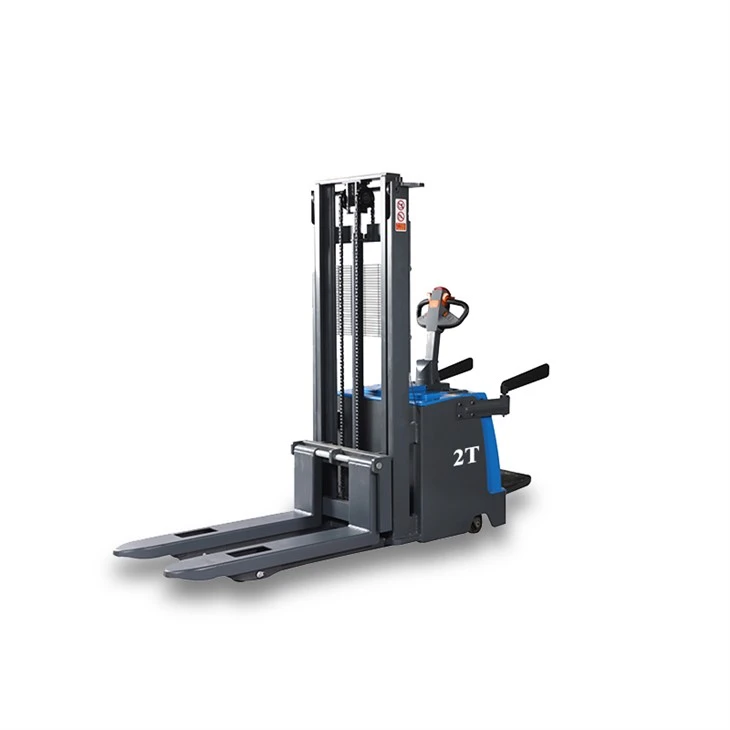
The size of the stacker also plays a role. Generally, smaller stackers have a smaller turning radius. However, this isn't always the case. Some larger stackers are designed with advanced steering systems that allow them to turn more tightly.
The type of wheels and tires on the stacker can also affect the turning radius. Wheels with a smaller diameter and a wider tread can provide better maneuverability. Additionally, some stackers are equipped with special tires that offer better traction and turning performance.
How to Choose the Right Turning Radius for Your Warehouse
So, how do you choose the right turning radius for your warehouse? The first step is to measure your aisles. Measure the width of your narrowest aisle and make sure the stacker you choose can fit through it. You should also consider the layout of your warehouse and any obstacles or tight corners that the stacker will need to navigate.
If you have a lot of narrow aisles, you might want to consider a stacker with a very small turning radius. Electric Pallet Jack Stacker are a great option for this. They are compact and highly maneuverable, making them ideal for tight spaces.
On the other hand, if you have wider aisles and need to move heavier loads, you might be able to get away with a stacker with a larger turning radius. Electric Stacker Truck Economical are a good choice for this. They are designed to handle heavier loads and are still relatively maneuverable.
Real-World Examples
Let's look at a couple of real-world examples to see how the turning radius can impact warehouse operations.
Example 1: A small warehouse with narrow aisles
A small warehouse has aisles that are only 6 feet wide. They need a stacker to move pallets around the warehouse. They choose a Walk Behind Pallet Stacker with a turning radius of 4 feet. This stacker can easily navigate through the narrow aisles, allowing them to maximize their storage space.
Example 2: A large warehouse with wider aisles
A large warehouse has aisles that are 10 feet wide. They need to move heavy pallets across the warehouse. They choose an Electric Stacker Truck Economical with a turning radius of 6 feet. This stacker can handle the heavy loads and still maneuver through the wider aisles efficiently.
Conclusion
In conclusion, the turning radius of a Powered Pallet Stacker is an important factor to consider when choosing a stacker for your warehouse. It can impact your storage capacity, efficiency, and productivity. By understanding what the turning radius is, why it matters, and how to choose the right one for your needs, you can make an informed decision and get the most out of your stacker.
If you're in the market for a Powered Pallet Stacker and have any questions about the turning radius or other features, don't hesitate to reach out. We're here to help you find the perfect stacker for your warehouse. Whether you need a stacker for narrow aisles or wide open spaces, we've got you covered. Let's start a conversation and see how we can improve your warehouse operations.
References
- Industry standards and guidelines for Powered Pallet Stackers
- Manufacturer specifications and product literature