


When operating a Walkie Pallet Stacker in a confined space, determining the minimum clearance is crucial for ensuring both safety and operational efficiency. As a Walkie Pallet Stacker supplier, I have witnessed firsthand the challenges and importance of understanding these clearance requirements. In this blog, I will delve into the factors that influence the minimum clearance and provide practical guidance for optimal operation in tight spaces.
Factors Affecting Minimum Clearance
1. Stacker Dimensions
The physical dimensions of the Walkie Pallet Stacker itself are the most fundamental factor in determining the minimum clearance. Different models come with varying lengths, widths, and heights. For instance, our 1.2 Ton Double Column Mini Electric Stacker Truck is designed with a more compact structure compared to some larger models. The width of the stacker, including the forks and any outriggers, must be considered. When turning or maneuvering, the stacker's turning radius also plays a significant role. A larger turning radius will require more space to execute a turn safely without hitting obstacles.
2. Load Size and Shape
The size and shape of the loads being handled by the Walkie Pallet Stacker are equally important. Irregularly shaped loads may protrude beyond the standard dimensions of the pallet, increasing the overall space needed for movement. A tall and unstable load may require additional clearance to prevent tipping during lifting and transportation. When stacking loads, the height of the stack also affects the clearance. Higher stacks demand more vertical clearance to avoid collisions with overhead structures such as pipes, beams, or low - hanging lights.
3. Operator Skills and Maneuverability
The skill level of the operator can influence the minimum clearance requirements. An experienced operator may be able to navigate a stacker in a tighter space with more precision. However, it is essential to design the workspace with a clearance that accommodates operators of varying skill levels. Some Walkie Pallet Stackers, like our Walking Pallet Stacker, are equipped with features that enhance maneuverability, such as tight - turning capabilities and easy - to - use controls. These features can help reduce the space needed for operation, but still, a certain minimum clearance is necessary.
4. Type of Confined Space
The nature of the confined space itself is a critical factor. A narrow aisle between racks may have different clearance requirements compared to a small storage room with multiple obstacles. In an aisle, the width of the aisle must be sufficient to allow the stacker to pass through while carrying a load. The presence of corners, columns, or other fixed structures also affects the clearance. For example, in a space with sharp corners, the stacker needs enough room to make a turn without hitting the corner or other equipment.
Calculating the Minimum Clearance
1. Width Clearance
To calculate the minimum width clearance, start with the width of the stacker. Measure the widest part of the stacker, including the forks and any attachments. Then, add an additional safety margin. A general rule of thumb is to add at least 12 - 18 inches (30 - 45 cm) on each side of the stacker. This extra space allows for minor deviations in the operator's path and provides a buffer in case of unexpected movements. For example, if the width of our Electric Pallet Forklift is 36 inches (91 cm), the minimum width clearance in a narrow aisle should be around 60 - 72 inches (152 - 183 cm).
2. Length Clearance
The length clearance is mainly determined by the stacker's turning radius and the length of the load. When making a turn, the stacker's rear end will swing out, and the load may also extend beyond the front of the stacker. Measure the turning radius of the stacker and add the length of the load. Then, add a safety margin of at least 24 - 36 inches (61 - 91 cm). This ensures that the stacker can make a turn without hitting any obstacles at the rear or front.
3. Vertical Clearance
Vertical clearance is crucial to prevent the load or the stacker from hitting overhead structures. Measure the maximum lifting height of the stacker and add the height of the load. Then, add a safety margin of at least 12 - 18 inches (30 - 45 cm). This accounts for any potential bouncing or swaying of the load during lifting and ensures that there is enough space for the stacker to operate safely under low - hanging objects.
Practical Tips for Operating in Confined Spaces
1. Pre - operation Inspection
Before operating the Walkie Pallet Stacker in a confined space, conduct a thorough pre - operation inspection. Check the stacker's brakes, steering, and lifting mechanisms. Inspect the confined space for any potential hazards such as loose debris, uneven floors, or damaged structures. Make sure all safety features of the stacker are functioning properly.
2. Slow and Steady Operation
In a confined space, it is essential to operate the stacker at a slow and steady pace. Avoid sudden starts, stops, or turns. This gives the operator more control over the stacker and reduces the risk of collisions. Use the stacker's horn or other warning devices to alert others in the area when approaching corners or blind spots.
3. Use of Mirrors and Sensors
Many modern Walkie Pallet Stackers are equipped with mirrors and sensors. Utilize these features to improve visibility and detect obstacles. Mirrors can help the operator see what is behind or to the side of the stacker, while sensors can detect the presence of objects in the stacker's path and automatically stop the stacker to prevent collisions.
4. Training and Certification
Ensure that all operators are properly trained and certified to operate the Walkie Pallet Stacker. Training should include not only the basic operation of the stacker but also specific techniques for operating in confined spaces. A well - trained operator is more likely to make safe and efficient use of the stacker, reducing the risk of accidents and damage to equipment and goods.
Conclusion
Determining the minimum clearance for a Walkie Pallet Stacker to operate in a confined space is a complex but essential task. By considering factors such as stacker dimensions, load size and shape, operator skills, and the type of confined space, and by following proper calculation methods and practical tips, you can ensure safe and efficient operation. As a Walkie Pallet Stacker supplier, we are committed to providing high - quality equipment and comprehensive support to help you optimize your operations in confined spaces.
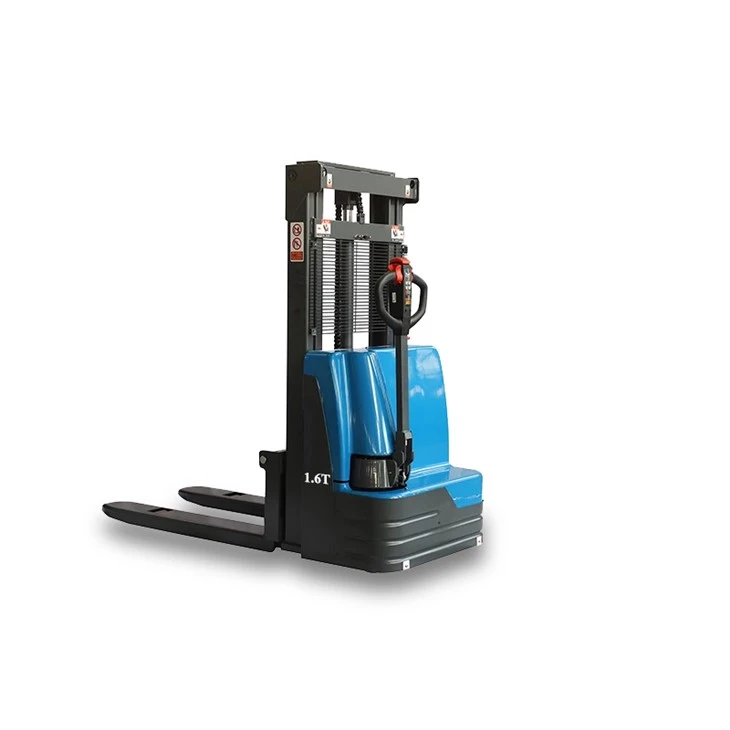

If you are interested in our Walkie Pallet Stacker products or need more information about operating them in confined spaces, we encourage you to reach out to us for a detailed discussion. Our team of experts is ready to assist you in finding the most suitable solution for your specific needs.
References
- Industrial Truck Association (ITA). "Safety Guidelines for Operating Forklifts in Confined Spaces."
- OSHA (Occupational Safety and Health Administration). "General Industry Standards for Powered Industrial Trucks."
- Manufacturer's manuals for Walkie Pallet Stackers.