


In the bustling world of material handling, stackers and forklifts are two indispensable workhorses. As a stacker supplier, I've witnessed firsthand the diverse needs of industries and the pivotal roles these machines play. In this blog, I'll delve into the differences between stackers and forklifts, helping you make an informed decision when it comes to your material handling requirements.
Design and Structure
One of the most apparent differences between stackers and forklifts lies in their design and structure. Forklifts are typically larger and more robust machines. They are built on a sturdy chassis with a mast that can extend vertically to lift loads to significant heights. The mast is often equipped with multiple stages, allowing for greater lifting capacity and reach. Forklifts also have a counterweight at the rear to balance the load being lifted at the front, ensuring stability during operation.
On the other hand, stackers are more compact and lightweight. They are designed for maneuverability in tight spaces, such as narrow aisles in warehouses. Stackers usually have a single mast or a simple lifting mechanism, which limits their lifting height compared to forklifts. However, their compact size makes them ideal for tasks that require frequent turning and precise positioning, such as stacking pallets in a confined area.
Lifting Capacity
Lifting capacity is another crucial factor that sets stackers and forklifts apart. Forklifts are known for their high lifting capacity, capable of handling heavy loads ranging from a few hundred kilograms to several tons. This makes them suitable for industries that deal with large and bulky items, such as construction, manufacturing, and logistics. Forklifts can also lift loads to greater heights, with some models capable of reaching up to 18 meters or more.
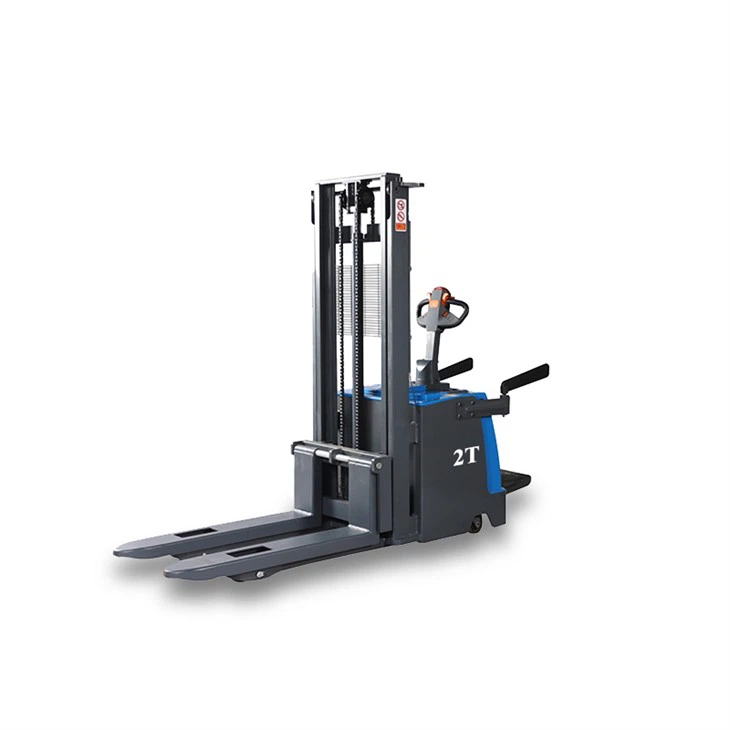

Stackers, on the other hand, have a relatively lower lifting capacity. They are typically designed to handle lighter loads, usually up to 2 tons. While this may seem limited compared to forklifts, stackers are still highly effective for tasks that involve stacking pallets or moving smaller items within a warehouse. Their lower lifting capacity also means they are more energy-efficient and easier to operate, making them a popular choice for small and medium-sized businesses.
Maneuverability
Maneuverability is a key consideration when choosing between a stacker and a forklift. Forklifts, due to their larger size and weight, have a relatively larger turning radius. This can make them less maneuverable in tight spaces, such as narrow aisles or congested warehouses. However, modern forklifts are equipped with advanced steering systems and features that improve their maneuverability, such as articulated steering and multi-directional wheels.
Stackers, on the other hand, are designed for maximum maneuverability. Their compact size and lightweight construction allow them to navigate through narrow aisles and tight corners with ease. Stackers also have a smaller turning radius, making them ideal for tasks that require frequent turning and precise positioning. Some stackers are even equipped with electric steering, which further enhances their maneuverability and reduces operator fatigue.
Applications
The differences in design, lifting capacity, and maneuverability between stackers and forklifts also translate into different applications. Forklifts are commonly used in industries that require heavy lifting and long-distance transportation of goods. They are ideal for loading and unloading trucks, moving large pallets, and stacking heavy items in warehouses. Forklifts are also used in outdoor applications, such as construction sites and ports, where their high lifting capacity and rugged construction make them suitable for handling heavy loads in challenging environments.
Stackers, on the other hand, are more commonly used in indoor applications, such as warehouses and distribution centers. They are ideal for stacking pallets, organizing inventory, and moving smaller items within a confined area. Stackers are also used in industries that require frequent turning and precise positioning, such as retail stores and supermarkets. Some stackers are even designed for specialized applications, such as cold storage warehouses and clean rooms.
Cost
Cost is always a factor when making a purchasing decision. Forklifts, due to their larger size, higher lifting capacity, and more advanced features, are generally more expensive than stackers. The initial purchase price of a forklift can range from a few thousand dollars to tens of thousands of dollars, depending on the model and specifications. Forklifts also require more maintenance and servicing, which can add to the overall cost of ownership.
Stackers, on the other hand, are more affordable. Their compact size and simpler design make them less expensive to purchase and operate. The initial purchase price of a stacker can range from a few hundred dollars to a few thousand dollars, depending on the model and features. Stackers also require less maintenance and servicing, which can result in significant cost savings over the long term.
Our Stacker Products
As a stacker supplier, we offer a wide range of stackers to meet the diverse needs of our customers. Our stackers are designed with the latest technology and features to ensure maximum performance, reliability, and safety. Here are some of our popular stacker products:
- Full Electric Pallet Stacker: This stacker is powered by an electric motor, which provides quiet and efficient operation. It has a lifting capacity of up to 2 tons and can lift loads to a height of up to 6 meters. The full electric pallet stacker is ideal for indoor applications, such as warehouses and distribution centers.
- Electric Pallet Forklift: This forklift is a combination of a stacker and a forklift. It has the lifting capacity and reach of a forklift, but the maneuverability and compact size of a stacker. The electric pallet forklift is powered by an electric motor, which provides quiet and efficient operation. It has a lifting capacity of up to 2 tons and can lift loads to a height of up to 4 meters. The electric pallet forklift is ideal for industries that require heavy lifting and precise positioning, such as manufacturing and logistics.
- Electric Stacker Truck Economical: This stacker is designed for small and medium-sized businesses that require an affordable and reliable material handling solution. It has a lifting capacity of up to 1.5 tons and can lift loads to a height of up to 3 meters. The electric stacker truck economical is powered by an electric motor, which provides quiet and efficient operation. It is easy to operate and maintain, making it a popular choice for businesses on a budget.
Conclusion
In conclusion, the choice between a stacker and a forklift depends on your specific material handling requirements. Forklifts are ideal for heavy lifting and long-distance transportation of goods, while stackers are more suitable for stacking pallets and moving smaller items within a confined area. When making a decision, consider factors such as lifting capacity, maneuverability, applications, and cost.
If you're still unsure which type of machine is right for you, our team of experts is here to help. We can provide you with detailed information about our stacker products and help you choose the one that best meets your needs. Contact us today to learn more about our stackers and how they can improve your material handling efficiency.
References
- Material Handling Equipment Manufacturers Association (MHEDA). (n.d.). Forklifts vs. Stackers: What's the Difference? Retrieved from [Website URL]
- Industrial Truck Association (ITA). (n.d.). Forklift Basics. Retrieved from [Website URL]
- OSHA. (n.d.). Powered Industrial Trucks. Retrieved from [Website URL]