


As a supplier of reach trucks, I often encounter customers who are confused about the differences between single - reach and telescopic - reach trucks. In this blog post, I'll explain these differences in detail to help you make an informed decision when choosing the right reach truck for your business.
1. Working Principle
Single - Reach Trucks
Single - reach trucks are designed with a relatively straightforward mechanism. They typically have a mast that can extend forward to a certain fixed distance. When the operator needs to access a pallet in a rack, the mast extends, and the forks move forward to pick up or deposit the load. This single - stage reach is sufficient for most standard warehousing operations where the aisles are relatively wide and the storage depth is not excessive.
For example, in a warehouse with standard 3 - 4 meter wide aisles and a storage depth of 1 - 2 pallets deep, a single - reach truck can efficiently handle the task. The reach distance of a single - reach truck is usually limited, but it is stable and easy to control. It is like a simple and reliable tool that gets the job done in a no - nonsense way.
Telescopic - Reach Trucks
Telescopic - reach trucks, on the other hand, have a more complex and advanced mechanism. They are equipped with a telescopic mast that can extend in multiple stages. This allows the forks to reach much deeper into the racks compared to single - reach trucks. The telescopic design enables the truck to access pallets in narrow aisles and at greater storage depths.
Imagine a high - density warehouse with very narrow aisles, perhaps only 2 - 2.5 meters wide, and pallets stored 3 - 4 deep. A telescopic - reach truck can easily navigate through these narrow spaces and reach the pallets at the back. It's like a precision instrument that can perform delicate operations in tight quarters.
2. Storage Density
Single - Reach Trucks
Single - reach trucks are suitable for warehouses with moderate storage density requirements. Since their reach is limited, they need wider aisles to operate effectively. This means that the overall storage density in a warehouse using single - reach trucks may be lower compared to those using telescopic - reach trucks.
However, they are still a great choice for warehouses where the focus is on easy access to pallets and a relatively simple storage layout. For instance, in a small - to - medium - sized warehouse where the inventory turnover is high and quick access to goods is crucial, single - reach trucks can provide a good balance between storage capacity and operational efficiency.
Telescopic - Reach Trucks
Telescopic - reach trucks are the go - to option for high - density storage. Their ability to reach deeper into the racks and operate in narrow aisles allows warehouses to maximize their storage space. By reducing the aisle width, more racks can be installed in the same area, resulting in a significantly higher storage density.
This is particularly beneficial for large - scale distribution centers and warehouses with limited floor space. With a telescopic - reach truck, you can store more products in the same square footage, which can lead to cost savings in terms of rent and infrastructure.
3. Load Capacity
Single - Reach Trucks
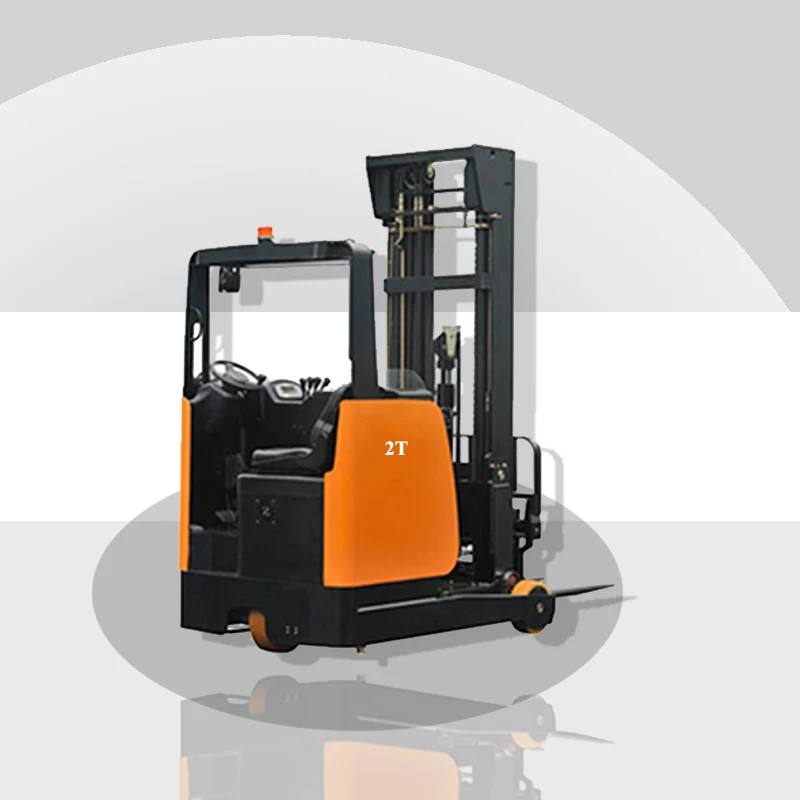
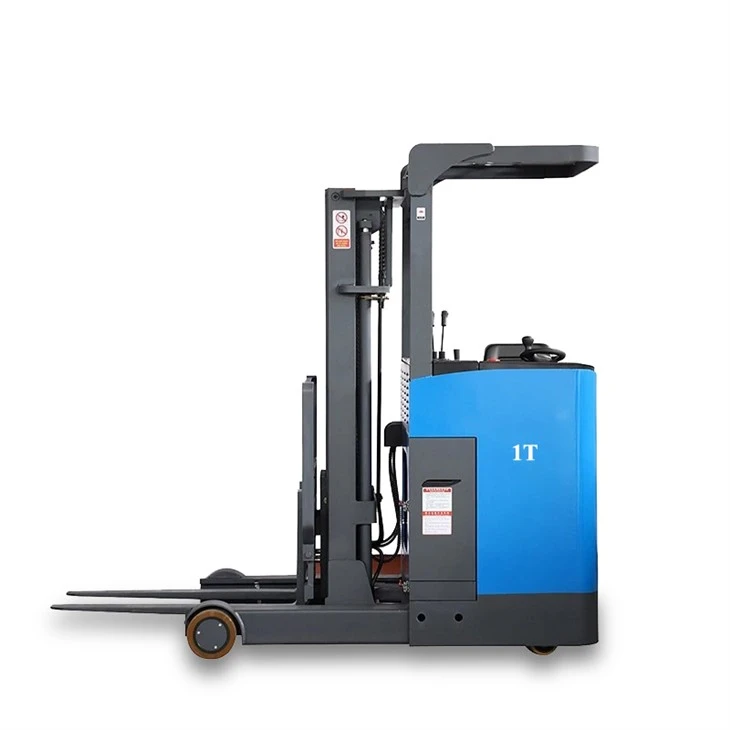
Single - reach trucks generally have a wide range of load capacities. They can handle loads from as small as 1 ton to larger loads up to 2 tons. The lower - capacity single - reach trucks, such as the 1 Ton Electric Reach Truck, are suitable for light - duty applications, like handling small parts or packaged goods.
On the other hand, the Reach Truck 2 Ton can handle heavier loads, such as pallets of building materials or large machinery parts. The load capacity of a single - reach truck is often determined by its design and the strength of its mast and forks.
Telescopic - Reach Trucks
Telescopic - reach trucks also come in various load capacities. However, due to their more complex design and the need to support the extended reach, the load capacity may be slightly lower compared to single - reach trucks of the same size in some cases.
Typically, telescopic - reach trucks can handle loads in the range of 1 - 1.5 tons. For example, the 1.2 Ton Stand Up Electric Reach is a popular choice for medium - duty applications in high - density warehouses. It can efficiently move pallets of different weights while maintaining stability during the telescopic reach operation.
4. Maneuverability
Single - Reach Trucks
Single - reach trucks are relatively easy to maneuver in wider aisles. They have a simple steering mechanism and a relatively short turning radius, which allows them to make quick turns and navigate through the warehouse with ease. This makes them ideal for warehouses with a lot of open space and a need for fast movement of goods.
Operators can quickly learn to operate single - reach trucks, and the low - complexity design reduces the chances of mechanical failures. They are like small cars that can zip around the warehouse, getting the job done efficiently.
Telescopic - Reach Trucks
Telescopic - reach trucks are designed for narrow - aisle operations, so they are highly maneuverable in tight spaces. Their advanced steering systems and compact design allow them to turn within a very small area. However, due to their more complex telescopic mechanism, they may require more skill and training for operators to use effectively.
The ability to navigate through narrow aisles and reach deep into the racks makes telescopic - reach trucks a great choice for warehouses with limited space. But it's important to ensure that operators are well - trained to handle the unique challenges of these trucks.
5. Cost
Single - Reach Trucks
Single - reach trucks are generally more affordable than telescopic - reach trucks. Their simpler design and less complex technology result in lower manufacturing costs, which are then passed on to the customers. Additionally, the maintenance costs of single - reach trucks are usually lower, as there are fewer components that can potentially fail.
For small and medium - sized businesses with a limited budget, single - reach trucks offer a cost - effective solution for their warehousing needs. They can provide a good return on investment without breaking the bank.
Telescopic - Reach Trucks
Telescopic - reach trucks are more expensive due to their advanced technology and complex design. The cost of the telescopic mast, the precision hydraulic systems, and the advanced control mechanisms all contribute to the higher price tag. Moreover, the maintenance of telescopic - reach trucks can be more costly, as they require specialized knowledge and parts.
However, for large - scale operations where high - density storage and efficient use of space are critical, the investment in a telescopic - reach truck can be justified by the long - term savings in storage space and increased productivity.
Conclusion
In conclusion, the choice between a single - reach and a telescopic - reach truck depends on your specific warehousing needs. If you have a warehouse with wide aisles, moderate storage density requirements, and a need for a cost - effective solution, a single - reach truck may be the right choice. On the other hand, if you operate in a high - density warehouse with narrow aisles and a need to access pallets at greater depths, a telescopic - reach truck is likely to be more suitable.
As a reach truck supplier, I'm here to help you make the best decision for your business. Whether you need a 1 Ton Electric Reach Truck for light - duty tasks or a Reach Truck 2 Ton for heavier loads, I can provide you with high - quality reach trucks that meet your requirements. If you're interested in learning more about our products or would like to discuss your specific needs, please feel free to contact me for a procurement consultation.
References
- Material Handling Equipment Handbook
- Warehouse Design and Operations Best Practices