


When it comes to counterbalance stackers, one of the key decisions you'll face is whether to choose a model with a side-shift feature or one without. As a leading counterbalance stacker supplier, I've seen firsthand how this choice can significantly impact your operations. In this blog, I'll explore the differences between counterbalance stackers with and without side-shift capabilities, helping you make an informed decision for your business.
Understanding Counterbalance Stackers
Before delving into the side-shift feature, let's briefly understand what counterbalance stackers are. Counterbalance stackers are material handling equipment designed to lift and stack loads in warehouses, distribution centers, and other industrial settings. They are known for their stability, as the weight of the load is counterbalanced by the weight of the machine itself. This allows them to operate without the need for outriggers, making them more maneuverable in tight spaces.
Counterbalance Stackers Without Side-Shift
Counterbalance stackers without side-shift are the more basic and traditional option. These stackers are straightforward in their operation, with the forks moving only up and down. They are ideal for simple stacking tasks where the load can be accurately positioned directly in front of the stacker.
Advantages
- Simplicity and Reliability: Without the additional side-shift mechanism, these stackers are simpler in design, which often translates to fewer mechanical parts and less maintenance. This can result in lower long-term operating costs and fewer breakdowns.
- Cost-Effectiveness: Generally, counterbalance stackers without side-shift are more affordable upfront. If your budget is tight and your stacking requirements are relatively basic, this can be a cost-effective solution.
- Higher Lifting Capacity: Since there is no side-shift mechanism adding weight and complexity, these stackers can sometimes offer a higher lifting capacity. This makes them suitable for handling heavier loads.
Disadvantages
- Limited Maneuverability: The lack of side-shift means that precise positioning of the load can be more challenging. You may need to reposition the entire stacker to align the forks with the load or the storage location, which can be time-consuming, especially in narrow aisles.
- Increased Operator Skill Required: Operators need to be more precise in their driving and positioning to ensure accurate stacking. This can lead to a steeper learning curve for new operators.
Counterbalance Stackers With Side-Shift
Counterbalance stackers with side-shift come equipped with a mechanism that allows the forks to move horizontally from side to side. This feature provides greater flexibility and precision in load positioning.
Advantages
- Enhanced Maneuverability: The side-shift feature allows operators to make small adjustments to the fork position without having to reposition the entire stacker. This is particularly useful in narrow aisles or when working in congested areas, as it reduces the need for multiple maneuvers.
- Improved Efficiency: With the ability to quickly and accurately position the load, tasks can be completed more efficiently. This can lead to increased productivity, especially in high-volume operations.
- Reduced Operator Fatigue: Since operators don't have to constantly reposition the stacker, they can work more comfortably and with less physical strain. This can lead to fewer errors and a more consistent level of performance.
Disadvantages
- Higher Cost: The additional side-shift mechanism adds to the complexity and cost of the stacker. This means a higher upfront investment, which may not be feasible for some businesses.
- Increased Maintenance Requirements: With more moving parts, there is a greater chance of mechanical issues. Regular maintenance and inspections are essential to ensure the side-shift mechanism operates smoothly.
- Slightly Lower Lifting Capacity: The added weight of the side-shift mechanism can reduce the overall lifting capacity of the stacker compared to a non-side-shift model.
Real-World Applications
The choice between a counterbalance stacker with or without side-shift depends largely on your specific application and operational requirements.
Applications for Non-Side-Shift Stackers
- Simple Stacking in Open Areas: If you have a large, open warehouse with plenty of space to maneuver, a non-side-shift stacker can be a practical choice. For example, in a lumber yard where long planks are stacked in straight rows, precise side positioning may not be necessary.
- Heavy Load Handling: When dealing with extremely heavy loads, a non-side-shift stacker's higher lifting capacity may be crucial. Industries such as steel manufacturing or heavy machinery storage often rely on these types of stackers.
Applications for Side-Shift Stackers
- Narrow Aisle Warehousing: In modern warehouses with narrow aisles, the side-shift feature is invaluable. It allows operators to position loads accurately without having to reposition the entire stacker, maximizing storage space utilization.
- High-Volume Order Picking: In distribution centers where orders need to be picked and stacked quickly, the efficiency gains provided by side-shift stackers can significantly improve throughput.
Our Product Range
As a counterbalance stacker supplier, we offer a wide range of models to suit different needs. Whether you're looking for a simple and reliable non-side-shift stacker or a high-performance side-shift model, we have the solution for you.
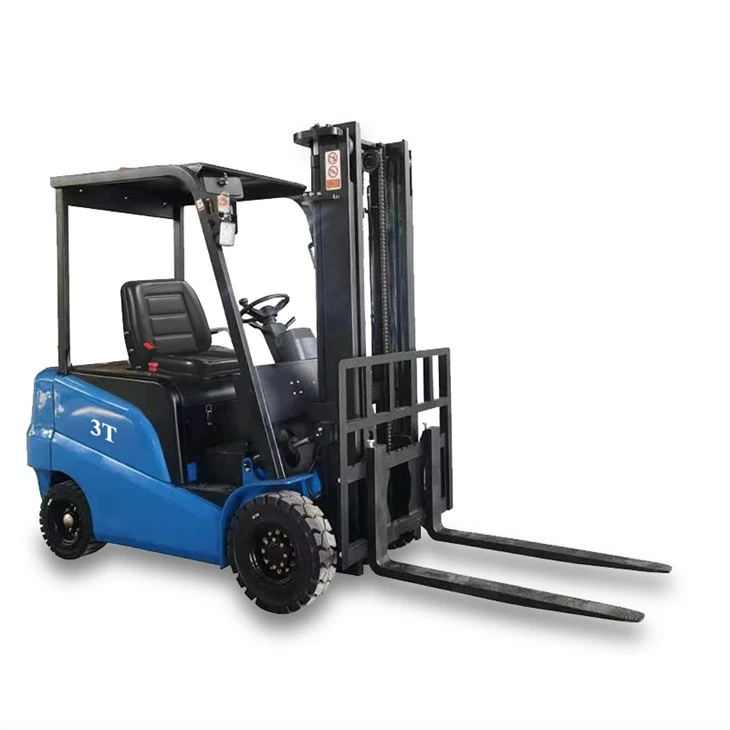
- 3 Ton CounterBalance forklift: This powerful stacker is available in both side-shift and non-side-shift configurations, offering a high lifting capacity for heavy loads.
- Electric Counter Balance: Our electric counterbalance stackers are environmentally friendly and offer smooth operation. Choose between side-shift and non-side-shift options depending on your requirements.
- Walkie Counterbalanced Stacker: Ideal for small to medium-sized warehouses, these walkie stackers are available with side-shift for enhanced maneuverability.
Making the Right Choice
When deciding between a counterbalance stacker with or without side-shift, consider the following factors:
- Warehouse Layout: If your warehouse has narrow aisles or limited space, a side-shift stacker may be the better choice. However, if you have a large, open area, a non-side-shift stacker could be sufficient.
- Load Characteristics: The size, weight, and shape of the loads you handle will also influence your decision. Heavier loads may require a non-side-shift stacker for its higher lifting capacity, while irregularly shaped loads may benefit from the flexibility of a side-shift stacker.
- Budget: Your budget will play a significant role in your decision. If cost is a major concern, a non-side-shift stacker may be more suitable. However, if the efficiency gains of a side-shift stacker can justify the higher upfront cost, it may be a worthwhile investment.
Contact Us for Purchase and Consultation
If you're still unsure which counterbalance stacker is right for your business, our team of experts is here to help. We can provide personalized advice based on your specific requirements and offer a free on-site consultation. Whether you're looking to purchase a new stacker or upgrade your existing equipment, we're committed to providing you with the best solution at a competitive price.

Don't hesitate to reach out to us to discuss your needs and explore our range of counterbalance stackers. Let us help you make the right choice for your business.
References
- "Material Handling Equipment Handbook" by the Material Handling Institute
- "Warehouse Design and Operations" by Tompkins International