


In the dynamic landscape of modern logistics, the integration of robots has revolutionized operations, enhancing efficiency, accuracy, and flexibility. As a leading supplier of Robots for Logistics, we understand the critical role that communication protocols play in ensuring seamless and reliable operation of these intelligent machines. In this blog post, we will explore the various communication protocols used by logistics robots, their significance, and how they contribute to the overall performance of our robotic solutions.
Understanding Communication Protocols in Logistics Robots
Communication protocols serve as the language that enables logistics robots to interact with each other, with the central control system, and with other devices in the logistics environment. These protocols define the rules and formats for data exchange, ensuring that information is transmitted accurately and efficiently. The choice of communication protocol depends on several factors, including the type of robot, the application requirements, the communication range, and the environmental conditions.
Common Communication Protocols Used in Logistics Robots
Wi-Fi
Wi-Fi is one of the most widely used communication protocols in logistics robots due to its high data transfer rate, wide coverage area, and ease of implementation. It allows robots to connect to the local network and communicate with the central control system, enabling real-time monitoring, control, and data exchange. Wi-Fi is particularly suitable for indoor logistics applications, such as warehouses and distribution centers, where a stable and high-speed network connection is required.
Bluetooth
Bluetooth is a short-range wireless communication protocol that is commonly used for communication between robots and other devices, such as sensors, actuators, and mobile devices. It offers low power consumption, low cost, and easy integration, making it an ideal choice for applications where a short-range and low-power communication is required. Bluetooth is often used for tasks such as asset tracking, inventory management, and robot-to-robot communication in close proximity.
ZigBee
ZigBee is a low-power, wireless communication protocol that is designed for applications that require low data rates and long battery life. It operates on the IEEE 802.15.4 standard and offers a mesh network topology, which allows multiple devices to communicate with each other over a large area. ZigBee is commonly used in logistics applications for tasks such as environmental monitoring, sensor data collection, and wireless control of devices.
Ethernet
Ethernet is a wired communication protocol that provides high-speed and reliable data transfer. It is commonly used for communication between robots and the central control system, as well as for communication between robots and other devices on the local network. Ethernet offers a high level of security and stability, making it an ideal choice for applications where a high-speed and reliable communication is required.
CAN Bus
CAN (Controller Area Network) Bus is a serial communication protocol that is widely used in automotive and industrial applications. It offers a high level of reliability, fault tolerance, and real-time performance, making it suitable for applications where a high level of safety and reliability is required. CAN Bus is commonly used in logistics robots for communication between different subsystems, such as the motor control system, the sensor system, and the control unit.
Significance of Communication Protocols in Logistics Robots
The choice of communication protocol has a significant impact on the performance and functionality of logistics robots. A well-designed communication protocol ensures that robots can communicate effectively with each other and with the central control system, enabling real-time monitoring, control, and data exchange. This, in turn, improves the efficiency, accuracy, and flexibility of logistics operations, reducing costs and increasing productivity.
In addition, communication protocols play a crucial role in ensuring the safety and reliability of logistics robots. By providing a reliable and secure communication channel, protocols help to prevent errors, collisions, and other safety hazards. They also enable remote monitoring and control of robots, allowing operators to respond quickly to any issues or emergencies.
Our Robotic Solutions and Communication Protocols
As a leading supplier of Robots for Logistics, we offer a wide range of robotic solutions that are designed to meet the diverse needs of our customers. Our robots are equipped with advanced communication protocols that ensure seamless and reliable operation in various logistics environments.
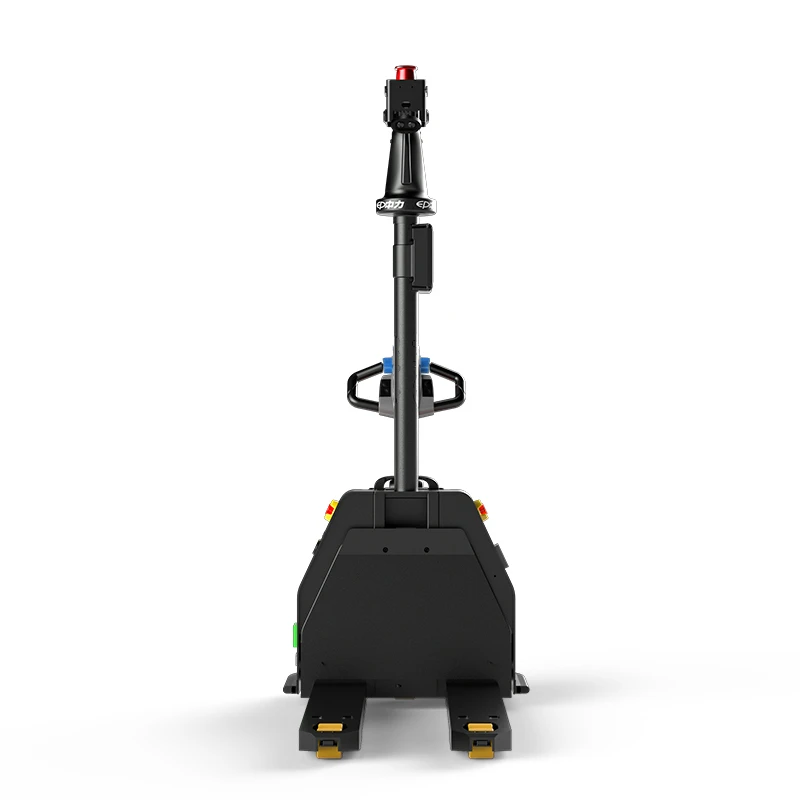
For example, our Pedal Type Automated Guided Vehicle is equipped with Wi-Fi and Bluetooth communication protocols, allowing it to connect to the local network and communicate with the central control system in real-time. This enables operators to monitor the vehicle's status, control its movement, and receive alerts and notifications in case of any issues.
Our Walk-behind Automated Transport Vehicle also uses Wi-Fi and Bluetooth for communication, as well as ZigBee for sensor data collection and environmental monitoring. This allows the vehicle to operate autonomously in a dynamic environment, avoiding obstacles and adapting to changes in the surroundings.
In addition, our Point-to-Point Intelligent Automatic Transport Vehicle uses Ethernet and CAN Bus for communication between different subsystems, ensuring high-speed and reliable data transfer. This enables the vehicle to perform complex tasks, such as precise positioning, material handling, and route planning.

Conclusion
Communication protocols are an essential component of logistics robots, enabling them to communicate effectively with each other, with the central control system, and with other devices in the logistics environment. The choice of protocol depends on several factors, including the type of robot, the application requirements, the communication range, and the environmental conditions.
As a leading supplier of Robots for Logistics, we are committed to providing our customers with the latest and most advanced robotic solutions that are equipped with the best communication protocols. Our robots are designed to improve the efficiency, accuracy, and flexibility of logistics operations, reducing costs and increasing productivity.
If you are interested in learning more about our robotic solutions and how they can benefit your logistics operations, please contact us to schedule a consultation. Our team of experts will be happy to discuss your specific needs and provide you with a customized solution that meets your requirements.
References
- IEEE 802.11 Standard for Wireless Local Area Networks
- Bluetooth Core Specification
- ZigBee Alliance Specification
- Ethernet Standard (IEEE 802.3)
- CAN Bus Protocol Specification