


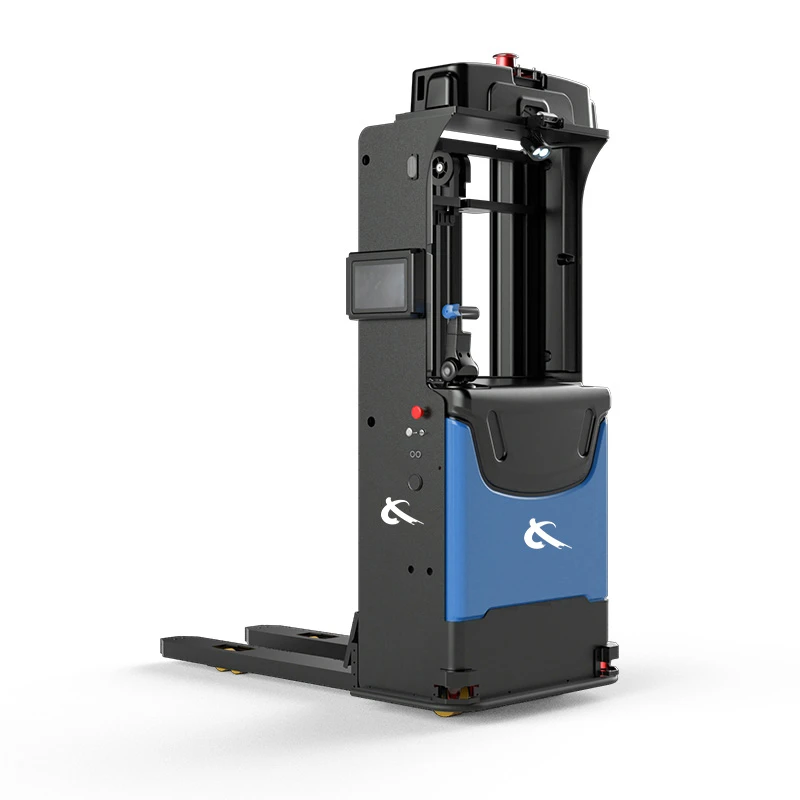
As a supplier of smart stackers, I've often been asked how to improve the stacking speed of these nifty machines. It's a question that hits close to home because, let's face it, in today's fast - paced industrial world, time is money. The faster your stacker can work, the more efficient your operations will be, and that means higher profits. So, let's dive into some practical ways to boost the stacking speed of a smart stacker.
1. Optimize the Warehouse Layout
The layout of your warehouse plays a huge role in how quickly your smart stacker can do its job. A well - organized warehouse with clear aisles and designated storage areas can significantly reduce the travel time of the stacker.
First off, make sure your aisles are wide enough for the stacker to move freely. If the aisles are too narrow, the stacker will have to slow down or even make multiple maneuvers to navigate through, which wastes a lot of time. You might want to consider using Automated Narrow Aisle Stacker if space is limited, as these stackers are designed to operate efficiently in tight spaces.
Secondly, group similar products together. This way, the stacker can make fewer trips back and forth across the warehouse. For example, if you have a lot of small, lightweight items, keep them in one area, and heavy, bulky items in another. This will help the stacker pick up and drop off items in a more systematic way, saving time and energy.
2. Upgrade the Stacker's Software
The software that controls your smart stacker is like its brain. Upgrading to the latest version can bring a whole host of benefits, including improved stacking speed.
Newer software often comes with advanced algorithms that can optimize the stacker's path. These algorithms take into account factors like the location of the items, the current position of the stacker, and the available storage space. By calculating the most efficient route, the stacker can move from one task to another more quickly.
Moreover, software upgrades can enhance the stacker's communication with other systems in the warehouse, such as inventory management systems. This seamless integration allows for real - time data sharing, so the stacker can react instantly to changes in inventory levels or order priorities.
3. Maintain the Stacker Regularly
A well - maintained stacker is a fast stacker. Regular maintenance ensures that all the components of the stacker are in good working condition, which is crucial for optimal performance.
Check the stacker's wheels, belts, and chains regularly for wear and tear. Worn - out parts can cause the stacker to move slower or even break down completely. Replace any damaged parts immediately to avoid any unnecessary downtime.
Also, keep the stacker clean. Dust and debris can accumulate in the moving parts, causing friction and reducing the stacker's efficiency. A simple cleaning routine can go a long way in keeping the stacker running smoothly.
4. Train Your Operators
Even the most advanced smart stacker won't perform at its best if the operators don't know how to use it properly. Training your operators is essential for improving stacking speed.
Provide comprehensive training on the stacker's features and functions. Teach them how to operate the stacker safely and efficiently, including how to use the control panel, how to load and unload items correctly, and how to troubleshoot common problems.
Encourage your operators to share their experiences and suggestions. They are the ones who work with the stacker every day, so they may have valuable insights on how to improve its performance.
5. Choose the Right Type of Stacker
Not all smart stackers are created equal. Choosing the right type of stacker for your specific needs can have a big impact on stacking speed.
If you need to move heavy loads, a Heavy Duty Stacker might be the way to go. These stackers are designed to handle large and heavy items with ease, so they can work faster when dealing with such loads.
On the other hand, if you have a lot of small items to stack, an AGV Stacker could be a better choice. AGV (Automated Guided Vehicle) stackers are highly automated and can move quickly between different storage locations, making them ideal for high - volume, small - item stacking.
6. Implement a Load - Balancing System
A load - balancing system can help distribute the workload evenly among multiple stackers. This ensures that no single stacker is overloaded, which can lead to slower operation and increased wear and tear.
By monitoring the tasks assigned to each stacker in real - time, the load - balancing system can reassign tasks as needed. For example, if one stacker is about to finish its current task and another stacker is still busy, the system can send a new task to the available stacker. This way, all the stackers can work at their optimal speed, improving the overall stacking efficiency of the warehouse.
7. Use Advanced Sensors
Advanced sensors can greatly enhance the stacker's ability to operate quickly and accurately. For example, laser sensors can be used to detect the position of items and the distance between the stacker and other objects. This allows the stacker to move more precisely, reducing the time it takes to pick up and place items.
Proximity sensors can also be installed to prevent collisions. By detecting the presence of other stackers or obstacles in the vicinity, the stacker can adjust its speed and direction in real - time, avoiding any potential accidents that could slow down the operation.
In conclusion, improving the stacking speed of a smart stacker requires a combination of factors, including warehouse layout optimization, software upgrades, regular maintenance, operator training, choosing the right stacker type, implementing a load - balancing system, and using advanced sensors. By taking these steps, you can significantly increase the efficiency of your warehouse operations and boost your bottom line.
If you're interested in learning more about our smart stackers or need help in improving the stacking speed of your existing stackers, don't hesitate to contact us for a procurement discussion. We're here to provide you with the best solutions for your stacking needs.

References
- Industrial Warehouse Automation Handbook
- Smart Stacker Technology and Applications Journal