


Hey there! As a solid tires supplier, I often get asked about the cornering performance of solid tires. It's a super important topic, especially for folks who rely on these tires for their vehicles or equipment. So, let's dive right in and explore whether solid tires have a different cornering performance compared to other types of tires.

First off, let's understand what solid tires are. Solid tires are made of a single piece of rubber or other solid materials, without an inner tube. They're known for their durability, puncture resistance, and long lifespan. These tires are commonly used in industrial applications, such as forklifts, golf carts, and some types of electric vehicles.
When it comes to cornering, there are a few factors that can affect how well a tire performs. One of the main factors is the tire's tread pattern. Tires with a more aggressive tread pattern tend to have better traction, which can improve cornering performance. However, solid tires usually have a simpler tread pattern compared to pneumatic tires (the ones with air inside). This is because they don't need to disperse water or provide the same level of grip on wet surfaces as pneumatic tires.
But does this simpler tread pattern mean that solid tires have worse cornering performance? Not necessarily. Solid tires have some unique characteristics that can actually give them an edge in certain situations. For example, their solid construction provides better stability and less sidewall flex compared to pneumatic tires. This means that when you're taking a turn, the tire is less likely to deform, which can result in more predictable handling.
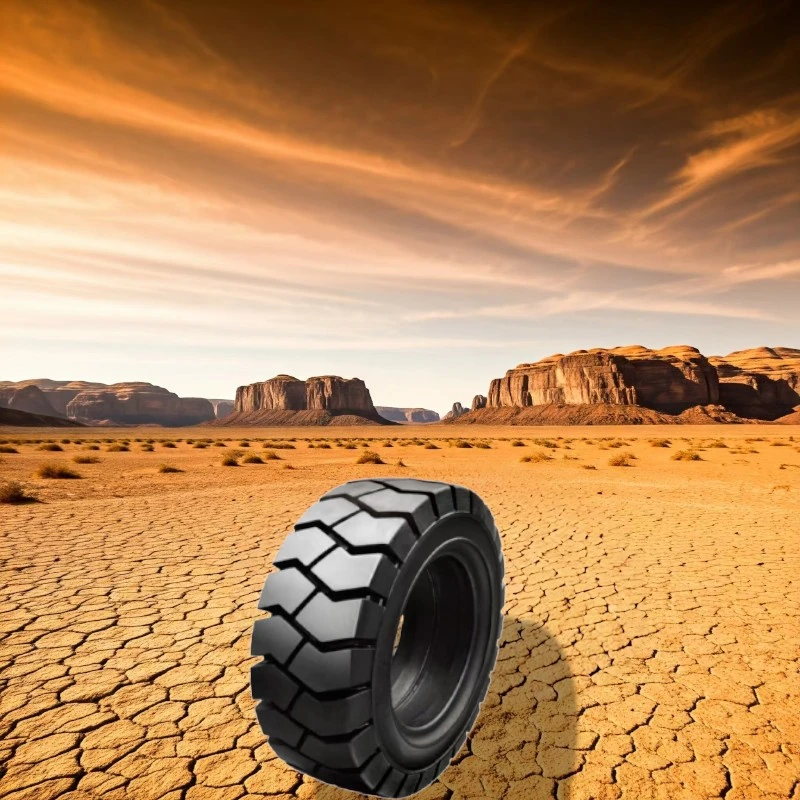
Another advantage of solid tires in cornering is their high load - carrying capacity. Since they're made of solid materials, they can handle heavy loads without losing their shape. This is particularly important in industrial applications where vehicles often carry large and heavy loads. When a vehicle is carrying a heavy load and taking a turn, solid tires can maintain better contact with the road surface, providing more grip and stability.

However, there are also some limitations to solid tires' cornering performance. One of the biggest drawbacks is their lack of shock absorption. Pneumatic tires can absorb shocks and vibrations from the road, which helps to keep the vehicle stable during cornering. Solid tires, on the other hand, transmit more of these shocks directly to the vehicle. This can make the ride a bit rougher and may also affect the driver's ability to control the vehicle during high - speed cornering.
The hardness of solid tires is another factor to consider. Solid tires are generally harder than pneumatic tires. While this hardness contributes to their durability, it can also reduce the tire's ability to conform to the road surface. As a result, the contact patch between the tire and the road may be smaller, which can lead to less grip during cornering, especially on uneven or slippery surfaces.
Now, let's talk about some of the different types of solid tires we offer and how they might perform in cornering. We have the Best Low Rolling Resistance Tires for Electric Cars. These tires are designed to reduce the amount of energy needed to move the vehicle forward, which can improve fuel efficiency or battery life in electric vehicles. In terms of cornering, their low rolling resistance can translate to a more responsive handling. Since less energy is wasted in rolling, the vehicle can more easily change direction when taking a turn.
Our Tires with Raised Rim Protector are another great option. The raised rim protector not only helps to prevent damage to the wheel rim but also adds an extra layer of stability to the tire. This can be beneficial during cornering, as it helps to keep the tire in place and reduces the risk of the tire slipping off the rim.
If you're looking for something lighter, our Light - duty Tires might be the way to go. These tires are designed for lighter vehicles or equipment and offer a good balance between durability and performance. They may not have the same load - carrying capacity as our heavy - duty solid tires, but they can still provide decent cornering performance, especially for applications where speed and maneuverability are important.
In conclusion, solid tires do have a different cornering performance compared to pneumatic tires. They offer some advantages, such as better stability and high load - carrying capacity, but also have some limitations, like less shock absorption and potentially less grip on certain surfaces. The type of solid tire you choose will depend on your specific needs and the application.
If you're interested in learning more about our solid tires or want to discuss your specific requirements, I'd love to hear from you. Whether you're in the market for industrial equipment tires or looking for tires for your electric vehicle, we can help you find the right solution. Don't hesitate to reach out to us for a quote or to start a conversation about your tire needs.
References
- Tire Technology Handbook, Various Authors
- Industrial Tire Performance Studies, Industry Research Groups