


Hey there! As a supplier of walking pallet stackers, I often get asked about the stability of these nifty machines. So, let's dive right in and break down what stability means in the context of a walking pallet stacker.
What is Stability Anyway?
Stability, in simple terms, is all about keeping the walking pallet stacker from tipping over. It's crucial for the safety of the operator and the goods being handled. When a stacker is stable, it can lift, move, and stack pallets without any scary moments of it going sideways or toppling over.
There are two main types of stability we need to consider: static stability and dynamic stability.
Static Stability
Static stability is about the stacker's ability to stay upright when it's not moving. Think of it like a table standing still on the floor. The stacker's design, including its weight distribution and the width of its base, plays a big role here. A wider base generally means more stability, just like a wider table is less likely to tip.
For example, our Powered Pallet Stacker is designed with a well - thought - out base width. This ensures that when it's loaded with a pallet of goods and just sitting there, it remains firmly on the ground. The counterweight at the back of the stacker also helps balance the load on the forks, keeping the center of gravity within a safe range.
Dynamic Stability
Dynamic stability comes into play when the stacker is in motion. This includes moving forward, backward, turning, and especially when lifting or lowering loads. When the stacker is moving, the forces acting on it change constantly. For instance, when you make a sharp turn while the forks are raised, there's a risk of the stacker tipping due to centrifugal force.
Our Electric Stacker Truck is engineered to handle these dynamic situations. It has a sophisticated control system that adjusts the speed and power distribution based on the movement and the load. This helps maintain a stable center of gravity even when the stacker is on the move.
Factors Affecting Stability
A bunch of factors can influence the stability of a walking pallet stacker. Let's take a look at some of the most important ones.
Load Characteristics
The weight, size, and position of the load on the forks matter a great deal. A heavy load that's not centered properly can shift the center of gravity of the stacker, making it less stable. For example, if you load a pallet with all the weight on one side, the stacker is more likely to tip.
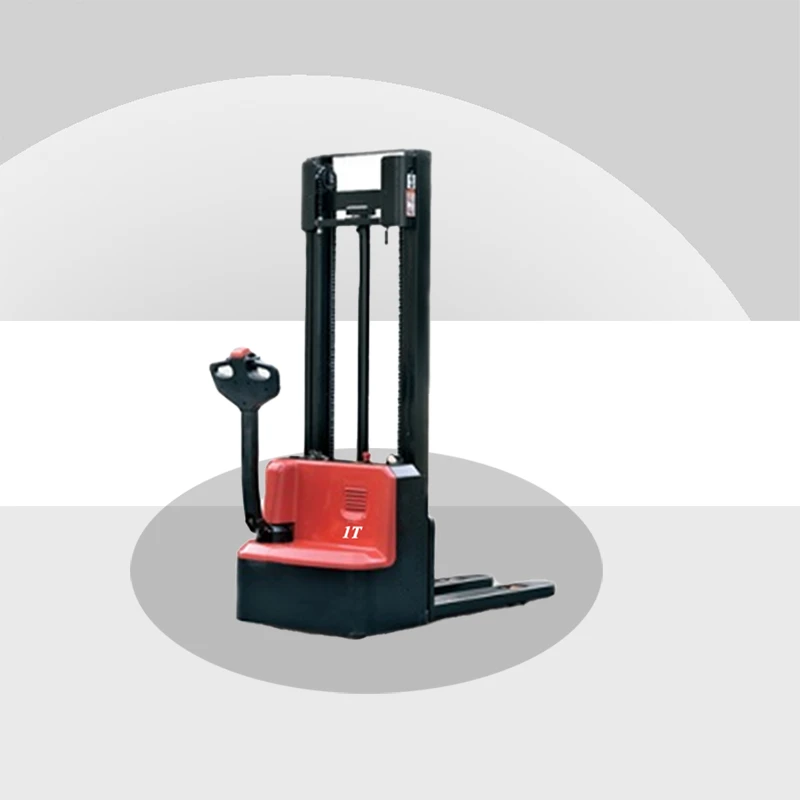
That's why we always recommend following the load capacity guidelines. Our 1 Ton Double Column Mini Electric Stacker Truck has a clearly marked load limit, and it's designed to handle loads within that range safely.
Fork Height
The higher the forks are raised, the more unstable the stacker becomes. As the forks go up, the center of gravity of the combined stacker - load system moves higher. This makes the stacker more top - heavy and increases the risk of tipping, especially during turns or sudden stops.
To counter this, our stackers are equipped with safety features. For example, there are sensors that can detect the fork height and adjust the movement speed accordingly. When the forks are at a high position, the stacker moves more slowly to reduce the risk of tipping.
Floor Conditions
The surface on which the stacker operates also affects stability. Uneven floors, slopes, or slippery surfaces can cause problems. If the floor is uneven, one wheel of the stacker might lose contact with the ground, which can throw off the balance.
We advise our customers to ensure that the operating area is as flat and smooth as possible. If there are slopes, the stacker should be used with extra caution, and operators should be trained on how to handle these situations.
Importance of Stability
The stability of a walking pallet stacker isn't just about avoiding accidents; it also has an impact on productivity and cost - efficiency.
Safety First
Safety is the number one priority. A stable stacker reduces the risk of accidents, which can lead to injuries to operators and damage to goods. No one wants to see a stacker tip over and cause a big mess. By investing in a stable stacker, you're creating a safer work environment for everyone.
Productivity
A stable stacker can work more efficiently. When the operator doesn't have to worry about the stacker tipping over, they can focus on the task at hand. They can move loads faster and stack them more accurately, which means more work gets done in less time.

Cost - Efficiency
Fewer accidents mean less damage to the stacker and the goods. This translates to lower repair and replacement costs. Also, increased productivity means more output with the same amount of resources, which can lead to cost savings in the long run.
Our Commitment to Stability
As a supplier, we're constantly working to improve the stability of our walking pallet stackers. We use the latest technology and materials to design stackers that are not only stable but also easy to operate.
Our R & D team is always looking for ways to enhance the static and dynamic stability of our products. We conduct rigorous testing to ensure that each stacker meets the highest safety and stability standards.
If you're in the market for a walking pallet stacker, stability should be one of your top considerations. Our range of stackers, including the Powered Pallet Stacker, Electric Stacker Truck, and 1 Ton Double Column Mini Electric Stacker Truck, are designed with stability in mind.
If you have any questions about the stability of our stackers or want to learn more about our products, don't hesitate to get in touch. We're here to help you make the right choice for your business. Whether you're a small warehouse or a large distribution center, we have a stacker that can meet your needs. Reach out to us for a detailed discussion and let's talk about how we can help you improve your material handling operations.
References
- Industrial Forklift Safety Manual
- Engineering Principles of Material Handling Equipment