


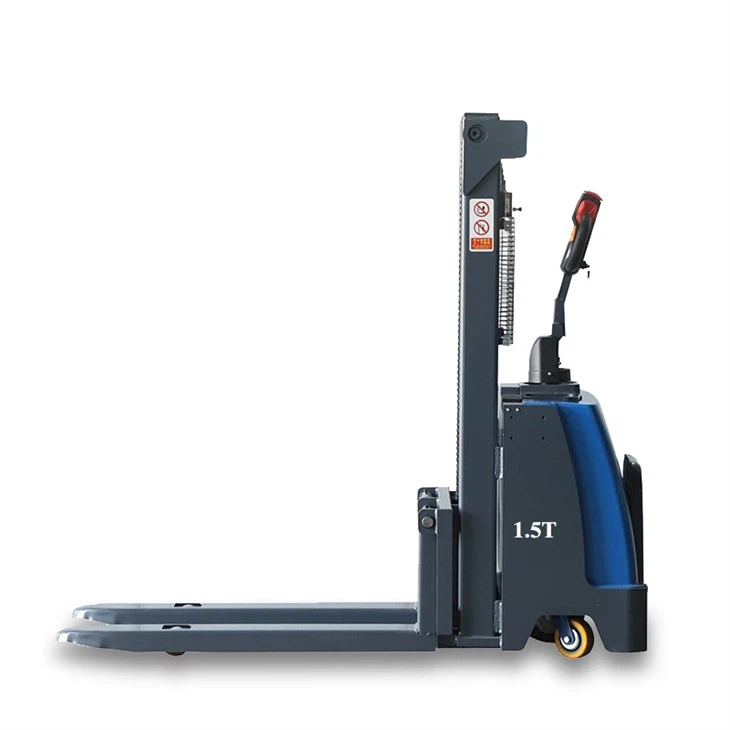
As a supplier of Walkie Pallet Stackers, I often encounter inquiries from customers about the power source of these essential warehouse tools. Understanding the power source is crucial as it directly affects the performance, efficiency, and cost - effectiveness of the equipment. In this blog, I will delve into the various power sources available for Walkie Pallet Stackers and their implications.
Battery - Powered Walkie Pallet Stackers
The most common power source for Walkie Pallet Stackers is the battery. Batteries offer several advantages that make them a popular choice in the material handling industry.
Types of Batteries
- Lead - Acid Batteries: These are the traditional choice for many electric industrial vehicles, including Walkie Pallet Stackers. Lead - acid batteries are known for their reliability and relatively low cost. They have been used in industrial applications for decades and are well - understood in terms of maintenance and replacement.
- However, they do require regular maintenance. This includes checking the electrolyte levels, ensuring proper charging to prevent sulfation, and periodic cleaning of the terminals. Over - charging or under - charging lead - acid batteries can significantly reduce their lifespan, which typically ranges from 3 - 5 years depending on usage and maintenance.
- Lithium - Ion Batteries: In recent years, lithium - ion batteries have gained popularity in the Walkie Pallet Stacker market. They offer a number of benefits over lead - acid batteries. Lithium - ion batteries have a much higher energy density, which means they can store more energy in a smaller and lighter package. This results in longer run - times for the stacker on a single charge.
- They also have a faster charging time. While a lead - acid battery may take 8 - 10 hours to fully charge, a lithium - ion battery can often be charged in 1 - 3 hours. Additionally, lithium - ion batteries have a longer lifespan, typically 5 - 10 years, and require very little maintenance. There is no need to check electrolyte levels or perform equalizing charges.
Advantages of Battery - Powered Stackers
- Environmentally Friendly: Battery - powered Walkie Pallet Stackers produce zero emissions during operation. This makes them ideal for indoor use, especially in warehouses and distribution centers where air quality is a concern.
- Quiet Operation: Compared to fuel - powered equipment, battery - powered stackers operate much more quietly. This reduces noise pollution in the workplace, creating a more comfortable environment for operators and other workers.
- Cost - Effective in the Long Run: Although the initial purchase price of a battery - powered stacker may be higher than a manual or fuel - powered one, the long - term operating costs are often lower. There are no fuel costs, and with proper maintenance, the batteries can last for several years.
Manual Power for Walkie Pallet Stackers
Some Walkie Pallet Stackers are designed to be operated manually. These stackers rely on the physical strength of the operator to lift and move pallets.
How Manual Power Works
Manual Walkie Pallet Stackers typically use a hydraulic pump system. The operator uses a hand - operated lever to pump hydraulic fluid into a cylinder, which raises the forks of the stacker. To lower the forks, the operator releases a valve, allowing the fluid to flow back into the reservoir.
Advantages of Manual Power
- Low Cost: Manual stackers are generally much less expensive to purchase than their powered counterparts. They do not require a battery or a fuel source, which reduces the initial investment.
- Simple Maintenance: With fewer mechanical and electrical components, manual stackers are easier to maintain. There is no need to worry about battery charging or fuel systems.
- Portability: Manual stackers are often lighter and more portable than powered stackers. They can be easily moved around a warehouse or transported to different locations without the need for additional equipment.
Disadvantages of Manual Power
- Limited Lifting Capacity: Manual stackers have a lower lifting capacity compared to powered stackers. They are typically suitable for light - duty applications, such as moving small pallets or boxes.
- Operator Fatigue: Operating a manual stacker requires physical effort from the operator. This can lead to fatigue, especially when handling a large number of pallets or working for long periods of time.
Fuel - Powered Walkie Pallet Stackers
Although less common than battery - powered or manual stackers, there are also fuel - powered Walkie Pallet Stackers available.
Types of Fuel
- Gasoline: Gasoline - powered stackers are similar to other gasoline - powered vehicles. They use an internal combustion engine to generate power. Gasoline is readily available in many areas, making refueling convenient.
- LPG (Liquefied Petroleum Gas): LPG is another popular fuel option for industrial equipment. It burns cleaner than gasoline, producing fewer emissions. LPG - powered stackers are also commonly used in indoor and outdoor applications.
Advantages of Fuel - Powered Stackers
- High Power and Performance: Fuel - powered stackers can provide high levels of power and performance. They are suitable for heavy - duty applications, such as lifting and moving large and heavy pallets.
- Long - Range Operation: Unlike battery - powered stackers, fuel - powered stackers do not require recharging. This allows for continuous operation over long periods of time, making them ideal for large - scale warehouses or outdoor applications.
Disadvantages of Fuel - Powered Stackers
- Emissions: Fuel - powered stackers produce emissions during operation, which can be a concern in indoor environments. They require proper ventilation to ensure the safety of operators and other workers.
- Noise and Vibration: The internal combustion engines in fuel - powered stackers generate more noise and vibration compared to battery - powered stackers. This can be a nuisance for operators and may also cause damage to the equipment over time.
- Higher Maintenance Costs: Fuel - powered stackers have more complex mechanical components, such as engines and fuel systems. This results in higher maintenance costs compared to battery - powered or manual stackers.
Choosing the Right Power Source
When choosing a Walkie Pallet Stacker, it is important to consider the specific requirements of your application. Here are some factors to consider:
- Application Type: If you are working in a small warehouse with light - duty tasks, a manual or battery - powered stacker may be sufficient. For heavy - duty applications in large warehouses or outdoor environments, a fuel - powered or high - capacity battery - powered stacker may be more appropriate.
- Operating Environment: Indoor applications require equipment that produces zero emissions and operates quietly. Battery - powered stackers are the best choice for indoor use. Outdoor applications can accommodate fuel - powered stackers, but you need to consider factors such as ventilation and noise reduction.
- Cost: Consider the initial purchase price, as well as the long - term operating costs. Battery - powered stackers may have a higher initial cost but lower operating costs over time, while manual stackers are generally the most cost - effective upfront.
We, as a Walkie Pallet Stacker supplier, offer a wide range of products with different power sources to meet the diverse needs of our customers. If you are interested in learning more about our Powered Pallet Stacker, Electric Stacker Pallet Jack, or Electric Stacker Truck, please feel free to contact us. Our team of experts is ready to assist you in choosing the right power source and equipment for your specific applications.

References
- "Material Handling Equipment Handbook", Industrial Press Inc.
- "Battery Technology for Electric Vehicles", Academic Press