


Hey there! I'm a supplier in the forklift replacement business, and I often get asked about the test drive procedures for a replacement forklift. So, I thought I'd share some insights on this topic.

First things first, before you even start the test drive, it's crucial to do a pre - drive inspection. This is like giving your forklift a quick once - over to make sure everything's in tip - top shape. Check the overall appearance of the forklift. Look for any visible signs of damage, like dents, scratches, or loose parts. You don't want to be on a test drive only to have something fall off!
Next, take a look at the tires. Make sure they're properly inflated. Under - inflated tires can affect the forklift's stability and handling. Also, check for any signs of excessive wear or cuts on the tires. A good set of tires is essential for a safe and smooth test drive.
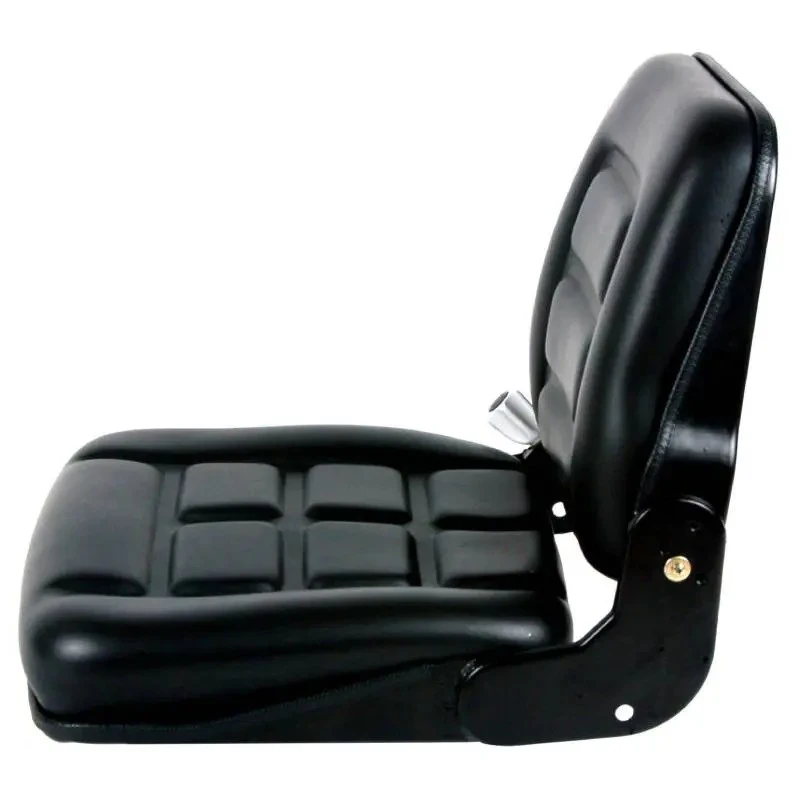
Now, let's move on to the controls. Sit in the operator's seat. If you're interested in a Forklift Seat without Armrests, this is your chance to see if it's comfortable. Adjust the seat to your liking, so you have a good view of the dashboard and controls.
Start by checking the steering wheel. Turn it gently from side to side. It should move smoothly without any jerks or strange noises. If you feel any resistance or hear grinding sounds, that's a red flag. The steering system is a vital part of the forklift, and any issues here can make it difficult to maneuver.
Then, look at the hydraulic controls. These are used to raise, lower, and tilt the forks. Move the levers up and down, and side to side. The forks should respond immediately and move smoothly. If there's a delay or if the movement is jerky, it could indicate a problem with the hydraulic system.
Once you've done the pre - drive checks, it's time to start the engine. Turn the key, and listen to how the engine sounds. A healthy engine should start up easily and run smoothly. If you hear any knocking, rattling, or other unusual noises, it might be a sign of engine trouble. And don't forget about the Diesel Filter Parts. A good diesel filter is important for the engine's performance and longevity.
Now that the engine is running, it's time to take the forklift for a spin. Start by moving forward slowly. Pay attention to how the forklift accelerates. It should pick up speed smoothly, without any sudden lurches. As you're moving, test the brakes. Press the brake pedal gently at first. The forklift should slow down gradually. Then, do a more forceful brake test to make sure it can stop quickly and safely when needed.
While you're driving, also check the turning radius. Try making some sharp turns in an open area. The forklift should be able to turn easily without hitting anything or getting stuck. This is especially important if you'll be using the forklift in a tight warehouse or storage area.
Next, it's time to test the forks. Find a suitable load (if possible) and pick it up. Use the hydraulic controls to raise the load to a reasonable height. Observe how the forklift handles the weight. It should remain stable, and the forks should hold the load securely. Lower the load back down carefully, and make sure the forks can be positioned accurately.
After you've done all these basic tests, it's a good idea to test the forklift on different surfaces. If you have access to a smooth floor and a slightly uneven one, drive the forklift on both. This will give you an idea of how it performs in various conditions.
Another important aspect is the visibility. As you're driving, check your visibility from the operator's seat. You should be able to see clearly in front, behind, and to the sides of the forklift. Poor visibility can lead to accidents, so this is a crucial factor.
Now, let's talk about the Main Reducer. The main reducer is responsible for transmitting power from the engine to the wheels. While you're driving, listen for any unusual noises coming from this area. A whining or grinding noise could indicate a problem with the main reducer.
Once you've completed the test drive, take a moment to think about your overall experience. Did the forklift meet your expectations? Were there any issues that you're concerned about? Make a list of any pros and cons you noticed during the test drive.
If you're satisfied with the test drive and think the replacement forklift is a good fit for your needs, it's time to get in touch with us. We're here to help you with all your forklift replacement needs. Whether you need parts, maintenance, or a brand - new replacement forklift, we've got you covered. Reach out to us to start the procurement process and let's get you the perfect forklift for your business.
In conclusion, a thorough test drive of a replacement forklift is essential. It helps you identify any potential problems early on and ensures that you're getting a reliable and safe piece of equipment. By following these procedures, you can make an informed decision when it comes to purchasing a replacement forklift.
References
- Forklift Operator Training Manuals
- Industry - standard Forklift Maintenance Guides