


In today's fast - paced business environment, logistics operations are the backbone of many industries. The integration of logistics robots into your business can significantly enhance efficiency, reduce costs, and improve overall productivity. As a supplier of Robots for Logistics, I understand the challenges businesses face when choosing the right logistics robot. In this blog, I'll share some key factors to consider to help you make an informed decision.
1. Assess Your Business Needs
The first step in choosing the right logistics robot is to thoroughly understand your business requirements. Consider the following aspects:
a. Workspace and Layout
The physical layout of your warehouse or distribution center plays a crucial role. If you have narrow aisles and limited space, a compact and maneuverable robot would be ideal. For example, a small - sized [Point - to - Point Intelligent Automatic Transport Vehicle](/agv/automatic - transport - vehicle/point - to - point - intelligent - automatic.html) can navigate through tight spaces with ease, making it suitable for facilities with complex layouts. On the other hand, if you have a large, open - floor workspace, a more robust and long - range robot might be more appropriate.
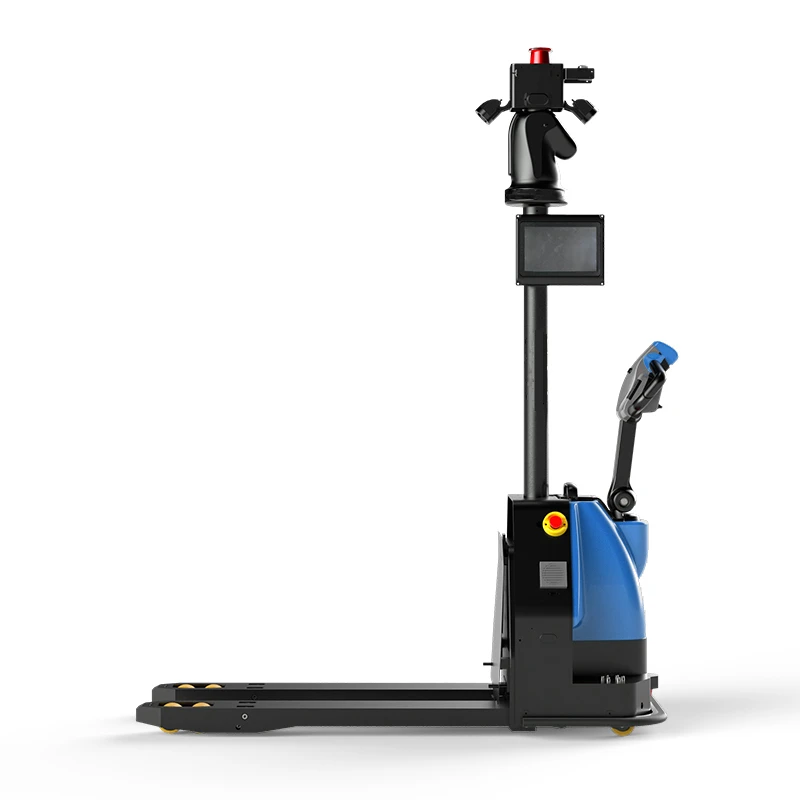
b. Load Capacity
Determine the weight and size of the items you need to transport. Different logistics robots have varying load - carrying capacities. If you deal with heavy and bulky goods, you'll need a robot with a high load capacity. Our [Pedal Type Automated Guided Vehicle](/agv/automatic - transport - vehicle/pedal - type - automated - guided - vehicle.html) is designed to handle relatively heavy loads, making it a great choice for industries such as manufacturing and construction.
c. Throughput Requirements
Consider how many items need to be moved within a specific time frame. High - throughput operations require robots that can work quickly and continuously. Look for robots with fast movement speeds and efficient pick - and - place capabilities. For businesses with lower throughput needs, a more moderately - paced robot might be sufficient, saving on costs.
2. Evaluate Robot Features
Once you have a clear understanding of your business needs, it's time to evaluate the features of different logistics robots.
a. Navigation Technology
Navigation is a critical feature of logistics robots. There are several types of navigation technologies available, including laser guidance, vision - based navigation, and magnetic tape guidance. Laser - guided robots are highly accurate and can operate in dynamic environments. Vision - based navigation allows robots to adapt to changes in the surroundings. Magnetic tape - guided robots are cost - effective and easy to install. Choose the navigation technology that best suits your workspace and operational requirements.
b. Autonomy Level
The level of autonomy of a logistics robot is another important factor. Some robots require human intervention for certain tasks, while others can operate completely independently. Fully autonomous robots can improve efficiency by eliminating the need for constant human supervision. However, they may also be more expensive. Semi - autonomous robots can be a good compromise, allowing human operators to step in when necessary.
c. Safety Features
Safety is paramount in any logistics operation. Look for robots equipped with safety features such as collision detection sensors, emergency stop buttons, and speed control. These features can prevent accidents and protect both the robot and your employees. For example, our [Walk - behind Automated Transport Vehicle](/agv/automatic - transport - vehicle/walk - behind - automated - transport - vehicle.html) is designed with multiple safety sensors to ensure safe operation in a shared workspace.
3. Consider Integration and Compatibility
Your logistics robot should be able to integrate seamlessly with your existing systems and infrastructure.
a. Software Compatibility
Check if the robot's software can integrate with your warehouse management system (WMS), enterprise resource planning (ERP) system, or other relevant software. This integration allows for real - time data exchange and better coordination of operations. For example, the robot can receive tasks directly from the WMS and report its status back to the system.
b. Hardware Compatibility
Consider whether the robot can work with your existing material handling equipment, such as conveyors, racks, and pallets. Compatibility ensures smooth material flow and reduces the need for costly modifications to your infrastructure.
4. Analyze Total Cost of Ownership
When choosing a logistics robot, it's important to look beyond the initial purchase price and consider the total cost of ownership (TCO).
a. Purchase Price
The purchase price of the robot is an obvious cost factor. However, don't just focus on the lowest price. A cheaper robot may lack the features and performance you need, which could lead to higher costs in the long run.
b. Operating Costs
Operating costs include energy consumption, maintenance, and repair. Robots with energy - efficient designs can help reduce electricity bills. Regular maintenance is essential to keep the robot in good working condition, so consider the availability of spare parts and the cost of maintenance services.
c. Training Costs
Your employees will need to be trained to operate and maintain the logistics robot. Factor in the cost of training programs and the time required for employees to become proficient.
5. Look for Supplier Support
As a logistics robot supplier, I know that reliable supplier support is crucial.
a. Technical Support
Choose a supplier that offers 24/7 technical support. In case of any issues or breakdowns, you need to be able to get help quickly to minimize downtime.
b. Warranty and Service Agreements
A good warranty and service agreement can provide peace of mind. Look for a supplier that offers a reasonable warranty period and comprehensive service packages.

c. Product Updates and Upgrades
The technology of logistics robots is constantly evolving. A supplier that offers product updates and upgrades can help you keep your robot up - to - date with the latest features and performance improvements.
6. Check for Scalability
Your business may grow and change over time, so it's important to choose a logistics robot that can scale with your operations.
a. Expandability
Look for robots that can be easily expanded or integrated with additional units. This allows you to increase your automation capacity as your business expands.
b. Adaptability
The robot should be able to adapt to changes in your product range, order volume, or operational processes. A flexible robot can save you from having to replace it when your business needs change.
In conclusion, choosing the right logistics robot for your business is a complex decision that requires careful consideration of your business needs, robot features, integration and compatibility, total cost of ownership, supplier support, and scalability. As a Robots for Logistics supplier, we are committed to helping you find the perfect solution for your logistics operations. If you're interested in learning more about our products or discussing your specific requirements, we invite you to reach out to us for a procurement consultation. We look forward to working with you to optimize your logistics processes and drive your business forward.
References
- Groover, M. P. (2011). Automation, Production Systems, and Computer - Integrated Manufacturing. Pearson.
- Christopher, M. (2016). Logistics & Supply Chain Management. Pearson.
- LaLonde, B. J., & Masters, J. C. (1994). Customer Service in the Logistics Strategy. Council of Logistics Management.