


In today's fast - paced business world, supply chain visibility has become a crucial factor for companies aiming to stay competitive. As a supplier of Robots for Logistics, I've witnessed firsthand how logistics robots are revolutionizing the way supply chains operate and enhancing visibility.
Real - time Tracking and Monitoring
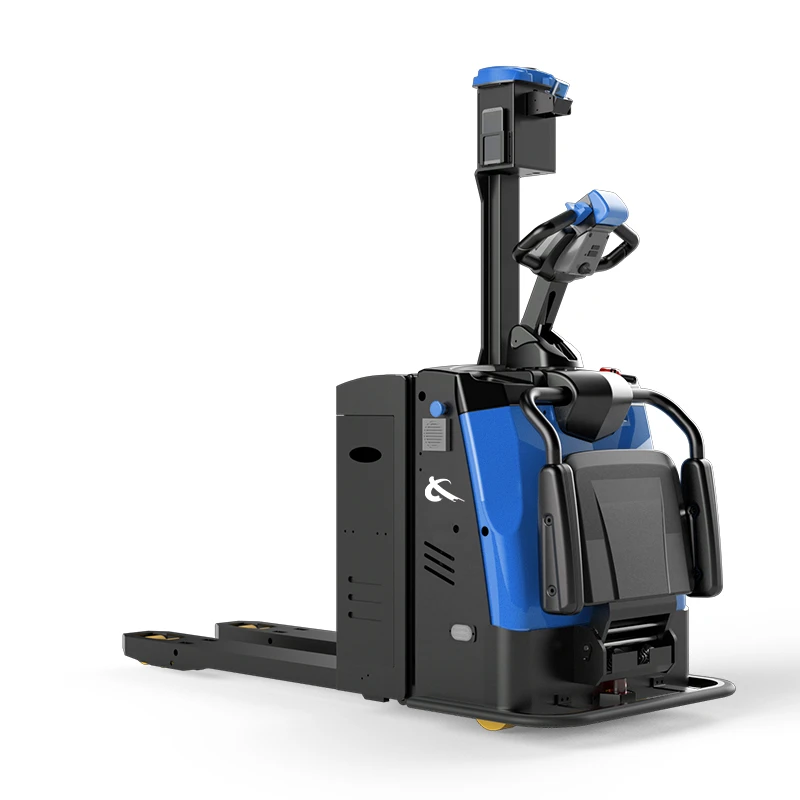
One of the most significant contributions of logistics robots to supply chain visibility is real - time tracking and monitoring. These robots are equipped with advanced sensors and GPS technology, which allow them to constantly report their location and status. For example, our Pedal Type Automated Guided Vehicle can send real - time data about its position within a warehouse, the items it's carrying, and its battery level.
This real - time data is sent to a central control system, where managers can access it at any time. They can see exactly where each robot is in the supply chain, whether it's picking up goods from a storage area, transporting them across the warehouse, or delivering them to a loading dock. This level of visibility helps in quickly identifying bottlenecks or delays. If a robot gets stuck or experiences a technical issue, managers can be alerted immediately and take corrective action.
Inventory Management
Logistics robots also play a vital role in inventory management, which is a key aspect of supply chain visibility. Our Walk - behind Automated Transport Vehicle can be used to conduct regular inventory checks. These robots are programmed to scan barcodes or use RFID technology to identify and count items in the warehouse.
By doing so, they provide accurate and up - to - date inventory data. Managers can know exactly how many units of each product are in stock, where they are located, and when they were last moved. This information is crucial for preventing overstocking or stockouts. For instance, if the inventory data shows that a particular product is running low, the company can quickly place an order with the supplier to replenish the stock. On the other hand, if there is an overstock of a certain item, the company can plan promotions or find alternative markets to sell the excess inventory.
Process Optimization
Logistics robots contribute to supply chain visibility by enabling process optimization. They can collect data on the time it takes to complete various tasks in the supply chain, such as picking, packing, and shipping. Our High Speed Automated Transport Vehicle can record how long it takes to transport goods from one end of the warehouse to the other.
This data can be analyzed to identify inefficiencies in the process. For example, if it takes too long for a robot to pick up goods from a particular storage area, the layout of the warehouse can be re - evaluated. Maybe the storage racks are too far apart or the picking paths are not optimized. By making these adjustments based on the data collected by the robots, the overall efficiency of the supply chain can be improved.
Enhanced Communication
Another way logistics robots contribute to supply chain visibility is through enhanced communication. These robots can communicate with other devices and systems in the supply chain, such as conveyor belts, sorting machines, and warehouse management systems. They can share data about their tasks and status, which helps in coordinating the different processes in the supply chain.
For example, when a robot is about to deliver a batch of goods to a loading dock, it can send a signal to the conveyor belt system to prepare for the arrival. This seamless communication ensures that all parts of the supply chain are working in sync, reducing the chances of errors and delays. It also provides managers with a holistic view of the supply chain operations, as they can see how different processes are interacting with each other.

Predictive Analytics
Logistics robots generate a large amount of data over time. This data can be used for predictive analytics, which further enhances supply chain visibility. By analyzing historical data on robot movements, inventory levels, and order patterns, companies can predict future demand and plan their supply chain operations accordingly.
For instance, if the data shows that there is a seasonal increase in demand for a particular product, the company can increase its inventory levels in advance. It can also adjust the number of robots deployed for picking and transporting tasks to meet the expected demand. Predictive analytics helps in reducing uncertainties in the supply chain and making more informed decisions.
Cost Savings
Improved supply chain visibility through logistics robots also leads to cost savings. By having real - time information about inventory levels, companies can reduce the amount of capital tied up in inventory. They can order goods just in time, which reduces storage costs. Additionally, by optimizing processes and reducing delays, companies can save on labor costs and energy consumption.
For example, if the robots are operating more efficiently, they require less energy to perform their tasks. Also, with better visibility, fewer workers are needed to manually track inventory or manage the movement of goods, leading to significant cost savings in the long run.
Conclusion
In conclusion, logistics robots are making a huge impact on supply chain visibility. From real - time tracking and inventory management to process optimization and predictive analytics, these robots are providing companies with the information they need to run their supply chains more efficiently. As a supplier of Robots for Logistics, I'm excited to see how these technologies continue to evolve and improve supply chain operations.
If you're interested in enhancing your supply chain visibility with our logistics robots, I encourage you to reach out to us for a procurement discussion. We can work together to find the best solutions for your specific needs.
References
- "Supply Chain Management: Strategy, Planning, and Operation" by Sunil Chopra and Peter Meindl
- "Robotics in Logistics: Concepts, Methods, and Applications" by Stefan Nickel and Christian Fliedner