


Hey there! As a supplier of Powered Pallet Stackers, I've got a lot to say about the visibility from the operator's position on these nifty machines. Visibility is a big deal when it comes to operating a Powered Pallet Stacker safely and efficiently. Let's dive right in and take a closer look.
Why Visibility Matters
First off, let's talk about why visibility is so crucial. When you're using a Powered Pallet Stacker, you need to see what's around you. Whether you're moving pallets in a warehouse, a distribution center, or any other industrial setting, being able to spot obstacles, other workers, and potential hazards is essential. Good visibility can prevent accidents, reduce damage to goods and equipment, and improve overall productivity.
Imagine you're trying to stack pallets on a high shelf. If you can't clearly see the shelf or the pallet you're about to place on it, you're more likely to make a mistake. You might misalign the pallet, causing it to fall off the stack, or you could accidentally hit the shelf, damaging both the shelf and the pallet. These kinds of mistakes can lead to costly downtime and repairs.
Factors Affecting Visibility
There are several factors that can affect the visibility from the operator's position on a Powered Pallet Stacker. Let's take a look at some of the most important ones.
Machine Design
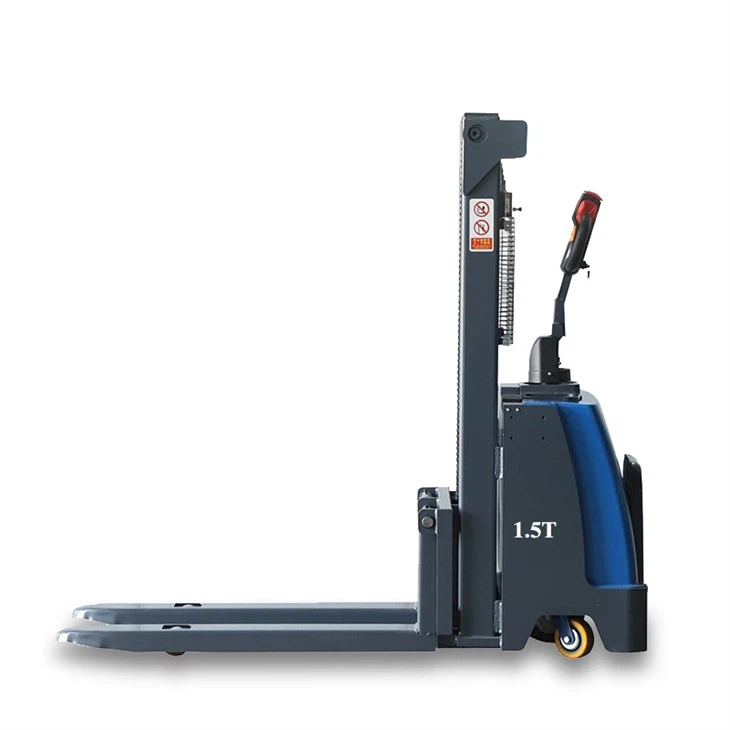
The design of the Powered Pallet Stacker itself plays a big role in visibility. Some stackers are designed with a low-profile mast, which allows the operator to see over the top of it more easily. Others may have a clear view mast, which uses clear plastic or other transparent materials to give the operator an unobstructed view of the area in front of the stacker.
Another aspect of machine design that affects visibility is the placement of controls and other components. If the controls are placed in a way that blocks the operator's view, it can make it difficult to see what's going on around the stacker. On the other hand, a well-designed stacker will have controls that are easy to reach and don't interfere with the operator's visibility.
Mast Height
The height of the mast on a Powered Pallet Stacker can also impact visibility. As the mast is raised, it can block the operator's view of the area in front of the stacker. This is especially true when the stacker is being used to stack pallets on high shelves. To compensate for this, some stackers are equipped with additional mirrors or cameras that provide the operator with a better view of what's going on above and behind the stacker.
Load Size and Shape
The size and shape of the load being carried by the Powered Pallet Stacker can also affect visibility. A large or oddly shaped load can block the operator's view of the area in front of the stacker, making it more difficult to maneuver. To address this issue, operators should always make sure that the load is properly secured and balanced before moving the stacker. They should also take extra care when moving a large or oddly shaped load, and use additional mirrors or cameras if necessary.
Lighting Conditions
Finally, the lighting conditions in the area where the Powered Pallet Stacker is being used can have a significant impact on visibility. Poor lighting can make it difficult to see obstacles, other workers, and potential hazards. To ensure good visibility, it's important to have adequate lighting in the warehouse or other industrial setting where the stacker is being used. This may include overhead lighting, task lighting, and emergency lighting.
Improving Visibility
Now that we've talked about the factors that affect visibility, let's take a look at some ways to improve it.
Choose the Right Machine
One of the most important things you can do to improve visibility is to choose the right Powered Pallet Stacker for your needs. Look for a stacker that is designed with good visibility in mind, such as one with a low-profile mast or a clear view mast. You may also want to consider a stacker that is equipped with additional mirrors or cameras to provide you with a better view of what's going on around the stacker.
Proper Training
Another key to improving visibility is to make sure that operators are properly trained. Operators should be trained on how to use the stacker safely and efficiently, including how to adjust the mirrors and cameras to get the best possible view. They should also be trained on how to identify potential hazards and how to take appropriate action to avoid them.
Maintenance and Inspection
Regular maintenance and inspection of the Powered Pallet Stacker is also important for maintaining good visibility. Make sure that the mirrors and cameras are clean and in good working condition, and that the lights are functioning properly. You should also check the mast and other components of the stacker for any signs of damage or wear that could affect visibility.
Use of Additional Equipment
In some cases, it may be necessary to use additional equipment to improve visibility. For example, you may want to consider using a spotter to help guide the stacker when it's being used in a crowded or confined area. You may also want to use reflective tape or other markings on the stacker and the load to make them more visible in low-light conditions.
Conclusion
In conclusion, visibility from the operator's position on a Powered Pallet Stacker is a critical factor in ensuring safe and efficient operation. By understanding the factors that affect visibility and taking steps to improve it, you can reduce the risk of accidents, damage to goods and equipment, and improve overall productivity.
As a supplier of Powered Pallet Stackers, we're committed to providing our customers with high-quality machines that are designed with good visibility in mind. We also offer a range of training and support services to help our customers get the most out of their stackers.

If you're in the market for a Powered Pallet Stacker or have any questions about visibility or other aspects of stacker operation, please don't hesitate to contact us for more information. We'd be happy to help you find the right machine for your needs and provide you with the support you need to operate it safely and efficiently.
References
- OSHA. (2023). Powered Industrial Trucks. Retrieved from https://www.osha.gov/pit
- Material Handling Industry of America. (2023). Powered Pallet Jacks and Stackers. Retrieved from https://www.mhia.org/PoweredPalletJacksStackers