


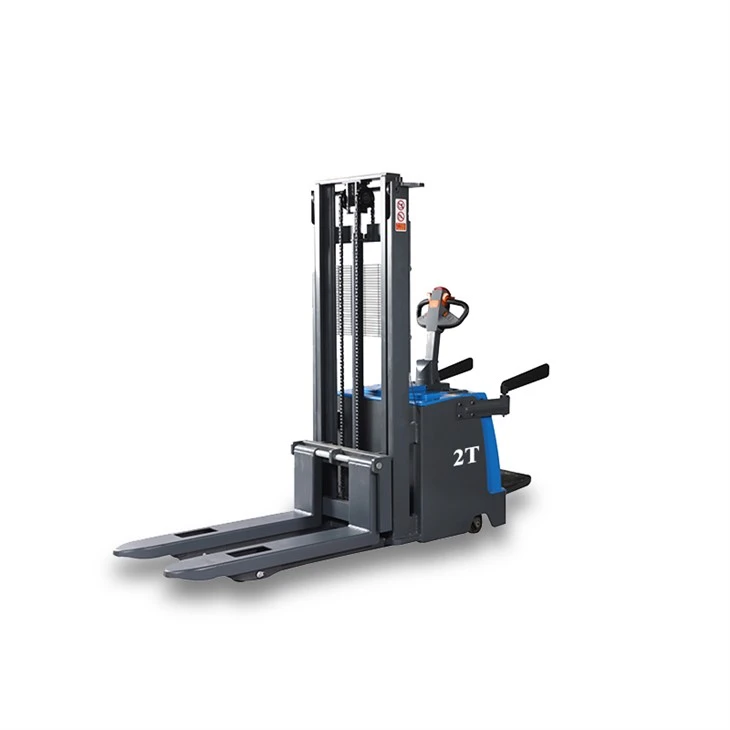
As a leading stacker supplier, I've witnessed firsthand the pivotal role that stacker batteries play in the seamless operation of our equipment. Stackers, such as the Electric Pallet Jack Stacker, Small Electric Pallet Stacker, and Walkie Pallet Stacker, rely heavily on their batteries for power. Understanding the storage requirements for these batteries is not just a technicality; it's a crucial step in ensuring their longevity, performance, and safety.
Temperature and Humidity Control
One of the most critical factors in stacker battery storage is temperature. Batteries are sensitive to extreme temperatures, which can significantly impact their chemical reactions and overall lifespan. High temperatures accelerate the self - discharge rate of the battery, leading to a loss of charge over time. This not only reduces the battery's capacity but also generates excessive heat, which can cause internal damage to the battery cells.
Conversely, low temperatures slow down the chemical reactions within the battery, reducing its ability to deliver power. In cold conditions, the battery's internal resistance increases, which means that it may not be able to provide the necessary current to operate the stacker efficiently. For most stacker batteries, the ideal storage temperature range is between 20°C and 25°C (68°F - 77°F).
Humidity is another important consideration. High humidity can lead to corrosion of the battery terminals and other metal components. Moisture in the air can react with the metal, forming rust and other corrosive substances that can interfere with the battery's electrical connections. It is recommended to store stacker batteries in an environment with a relative humidity of between 40% and 60%.
Charge Level
The charge level of the battery at the time of storage is also crucial. Storing a battery fully discharged can lead to sulfation, a process where lead sulfate crystals form on the battery plates. These crystals can harden over time, reducing the battery's capacity and making it difficult to recharge. On the other hand, storing a battery fully charged for an extended period can also cause damage. The constant high voltage can lead to over - charging, which can generate heat and cause the battery to lose water through electrolysis.
For long - term storage, it is advisable to store the battery at a charge level of around 50% to 80%. This intermediate charge level helps to prevent sulfation while also avoiding the negative effects of over - charging. If the battery is going to be stored for more than a few months, it should be recharged periodically to maintain this optimal charge level.
Ventilation
Proper ventilation is essential when storing stacker batteries. During the charging and discharging process, batteries can release hydrogen gas, which is highly flammable. In an enclosed space with poor ventilation, the hydrogen gas can accumulate to dangerous levels, creating a risk of explosion.
To prevent this, battery storage areas should be well - ventilated. Ventilation systems can help to remove the hydrogen gas from the storage area, reducing the risk of a fire or explosion. Additionally, ventilation can also help to control the temperature and humidity in the storage area, creating a more stable environment for the batteries.
Physical Storage Conditions
The physical storage conditions of the batteries are also important. Batteries should be stored in a clean, dry, and well - organized area. They should be placed on a stable surface that is free from sharp objects or other materials that could damage the battery casing.
Batteries should be stored upright to prevent electrolyte leakage. If the battery is tilted or placed on its side, the electrolyte may leak out, which can not only damage the battery but also pose a safety hazard. Additionally, the batteries should be stored away from direct sunlight and other sources of heat, such as heaters or industrial equipment.
Maintenance During Storage
Even when in storage, stacker batteries require some level of maintenance. Regular inspections should be carried out to check for any signs of damage, such as cracks in the battery casing, corrosion on the terminals, or leakage of electrolyte. If any damage is detected, the battery should be repaired or replaced immediately.
The battery terminals should be kept clean to ensure good electrical connections. This can be done by using a wire brush or a terminal cleaner to remove any dirt, corrosion, or oxidation from the terminals. After cleaning, a thin layer of petroleum jelly or terminal protector can be applied to the terminals to prevent further corrosion.
Compatibility with Stacker Models
It's important to note that different stacker models may have different battery requirements. For example, larger stackers, such as the Electric Pallet Jack Stacker, may require high - capacity batteries to provide the necessary power for lifting heavy loads. Smaller stackers, like the Small Electric Pallet Stacker, may be able to operate with lower - capacity batteries.
When storing batteries, it's crucial to ensure that they are compatible with the stacker models they are intended for. Using an incompatible battery can not only lead to poor performance but also pose a safety risk.
Safety Precautions
When handling and storing stacker batteries, several safety precautions should be taken. Batteries contain corrosive electrolytes, which can cause severe burns if they come into contact with the skin or eyes. Therefore, appropriate personal protective equipment (PPE), such as gloves and goggles, should be worn when handling batteries.
In addition, batteries should be stored away from sources of ignition, such as open flames, spark - generating equipment, or electrical switches. Smoking should be strictly prohibited in the battery storage area.
Conclusion
In conclusion, proper storage of stacker batteries is essential for maintaining their performance, longevity, and safety. By controlling the temperature and humidity, maintaining the appropriate charge level, ensuring proper ventilation, providing suitable physical storage conditions, and carrying out regular maintenance, you can ensure that your stacker batteries are in optimal condition when it's time to use them.

As a stacker supplier, we understand the importance of these storage requirements. We are committed to providing our customers with high - quality stackers and batteries, along with the knowledge and support they need to store and maintain them properly. If you have any questions about stacker battery storage or if you are interested in purchasing stackers or batteries, please feel free to contact us for more information and to start a procurement discussion.
References
- Battery Council International. Battery Storage Guidelines.
- National Fire Protection Association. NFPA 70: National Electrical Code.
- Manufacturer's manuals for stacker batteries.