


Hey there! As a counterbalance stacker supplier, I often get asked if these machines can be used in hazardous environments. It's a super important question, especially for businesses operating in places where safety is a top concern. So, let's dig into this topic and see what we can find out.
First off, let's understand what a counterbalance stacker is. A counterbalance stacker is a type of forklift that uses a counterweight at the rear to balance the load being lifted at the front. They're pretty versatile and can be used in a variety of settings, from warehouses to manufacturing plants. You can check out some of our models here: Pallet Stacker Counterbalance and Counterbalance Pallet Stacker.
Now, when it comes to hazardous environments, we're talking about places where there are risks like flammable materials, explosive atmospheres, or toxic substances. These environments require special precautions to ensure the safety of workers and the protection of equipment.
So, can a counterbalance stacker be used in such an environment? The answer is yes, but with some important considerations.
1. Explosion - Proof Design
In environments where there's a risk of explosion, you need an explosion - proof counterbalance stacker. These stackers are specially designed to prevent any potential ignition sources. For example, electrical components are enclosed in explosion - proof enclosures to stop sparks from escaping. The motors are also designed to operate without creating sparks that could ignite the surrounding atmosphere. Our 3 Ton CounterBalance forklift can be customized with explosion - proof features to meet the requirements of these high - risk areas.
2. Material Compatibility
If the environment has corrosive or toxic substances, the materials used in the stacker need to be resistant. For instance, the frame and forks of the stacker should be made of materials that won't corrode easily. Special coatings can also be applied to protect the metal parts from chemical damage. This ensures that the stacker remains in good working condition and doesn't contaminate the products or the environment.
3. Ventilation and Air Quality
In areas with poor air quality or where there are fumes, proper ventilation is crucial. Some counterbalance stackers are equipped with systems that can help maintain good air quality around the machine. This might include filters to remove dust and pollutants from the air intake, or exhaust systems that direct harmful gases away from the operator.
4. Operator Training
Even with a well - designed stacker, the operator plays a vital role in ensuring safety in a hazardous environment. Operators need to be trained specifically on how to handle the stacker in these conditions. They should know how to recognize potential hazards, follow safety procedures, and perform regular maintenance checks.
5. Maintenance and Inspections
Regular maintenance and inspections are a must. In a hazardous environment, any small malfunction can have serious consequences. So, the stacker should be inspected frequently to check for any signs of wear and tear, damage to safety features, or leaks. This helps to prevent breakdowns and ensures that the stacker is always operating safely.
Benefits of Using a Counterbalance Stacker in a Hazardous Environment
Despite the challenges, there are some great benefits to using a counterbalance stacker in a hazardous environment.
Efficiency
Counterbalance stackers are efficient machines. They can quickly move and stack loads, which can increase productivity even in difficult conditions. This means that businesses can get more work done in less time, which is always a plus.
Flexibility
These stackers are quite flexible in terms of their operation. They can maneuver in tight spaces, which is often necessary in industrial settings. This allows for better use of the available space and makes it easier to access different areas of the facility.
Customization
As a supplier, we can customize the counterbalance stackers to meet the specific needs of a hazardous environment. Whether it's adding explosion - proof features, changing the materials, or integrating special safety systems, we can tailor the machine to fit the requirements.
Challenges and How to Overcome Them
Of course, using a counterbalance stacker in a hazardous environment isn't without its challenges.
Cost
The cost of a counterbalance stacker designed for a hazardous environment is usually higher than a standard one. This is because of the additional safety features and specialized design. However, when you consider the potential costs of accidents and downtime in a hazardous environment, investing in a proper stacker can actually save money in the long run.
Availability
Finding the right stacker that meets all the safety requirements can be a challenge. But as a supplier, we have the expertise and resources to source or manufacture the right stacker for your needs. We work closely with our clients to understand their specific requirements and provide them with the best solution.
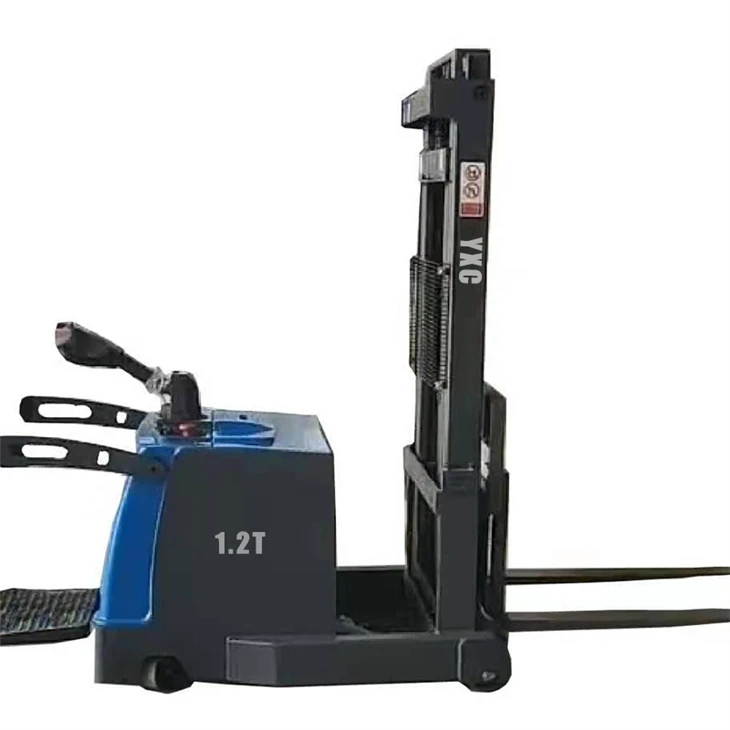

In conclusion, a counterbalance stacker can definitely be used in a hazardous environment, but it requires careful planning, proper design, and strict safety measures. If you're operating in such an environment and need a reliable counterbalance stacker, don't hesitate to reach out to us. We're here to help you find the perfect stacker for your business and ensure that it meets all the necessary safety standards. Whether you need an explosion - proof model, a stacker with special material compatibility, or just some advice on operating in a hazardous environment, we've got you covered. Let's start a conversation and see how we can work together to improve your operations and keep your workplace safe.
References:
- Industrial Forklift Safety Manuals
- Standards for Hazardous Environment Equipment by relevant safety organizations