


I. Abnormal Fork Lifting Handling
No lifting when unloaded
Check hydraulic oil level. Refill to standard mark if low (Prioritize using #6 or #8 hydraulic transmission oil) .
Bleed hydraulic system: Repeatedly operate lifting handle to check for air bubbles in hoses. Disassemble and clean filter if necessary.
Lifting jitter or stalling
Chain adjustment: Verify equal tension in left/right chains. Calibrate with adjustment bolts if deviations exist.
Roller lubrication: Lubricate mast rollers and bearings with engine oil. Replace rollers if deformation exceeds 1mm .
II. Fork Frame Tilt Emergency Repair
Basic component inspection
Measure tire pressure uniformity; inflate to standard value (0.8-1.0MPa).
Check for overload-induced fork frame deformation. Apply local flame correction for minor deformation; replace if severely deformed.
Temporary correction
Adjust fork frame position with pry bar. Reinforce by welding at roller shaft-mast joints (only for local deformation).
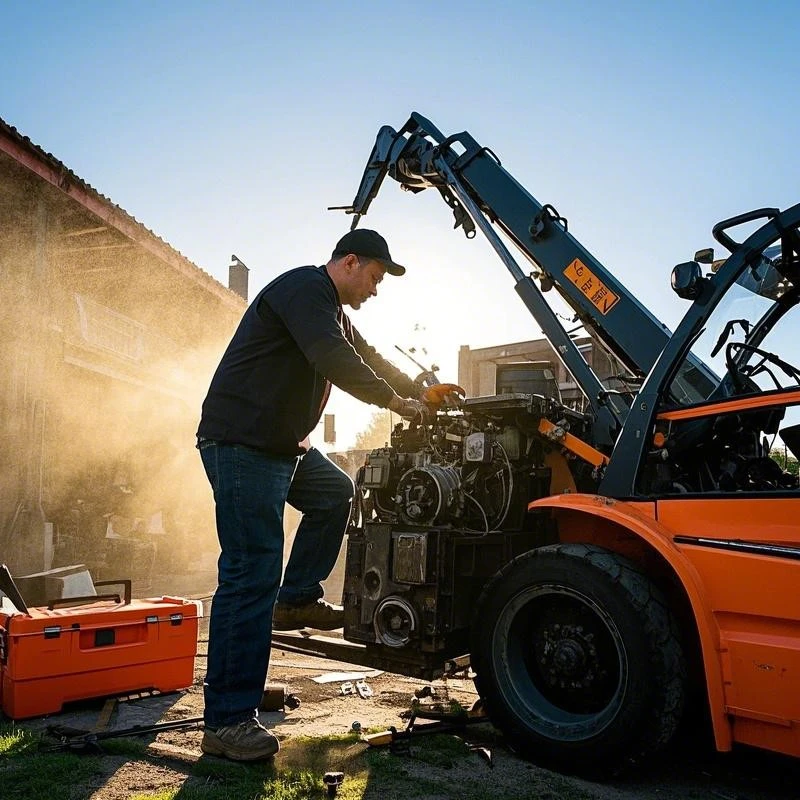
III. Hydraulic System Maintenance
Oil leakage handling
Temporary fix: Apply soap to cracks, wrap with cloth strips secured by wire (for small-diameter hoses).
Seal replacement: Prioritize O-ring or oil seal replacement for cylinder piston rod leaks (Use split iron rings during disassembly).
Hydraulic weakness troubleshooting
Clean fuel tank filter to prevent clogging 1.
Inspect speed limiter valve springs; temporarily replace broken springs with equivalents.
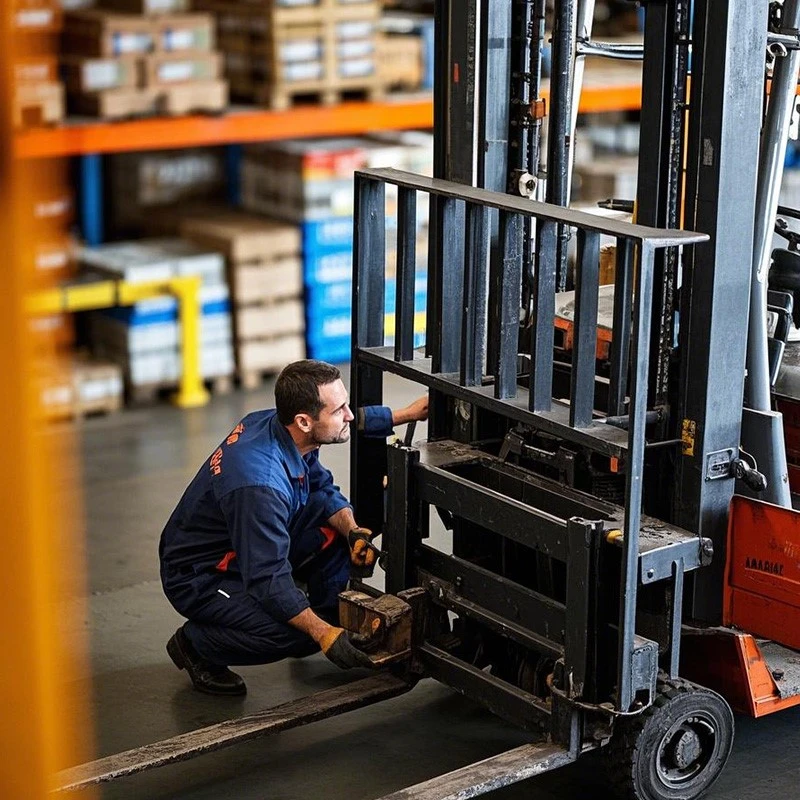
IV. Daily Maintenance Essentials
Cleaning & inspection
Remove debris from mast tracks and chains after daily operations.
Tighten fork frame bolts and wheel pins to prevent offset.
Lubrication cycles
Rollers/bearings: Weekly application of lithium-based grease.
Chains: Monthly anti-rust oil coating.
V. Safety Operations Reminder
Power off: Always disconnect battery negative terminal before repairs.
Support fixation: Use jacks + chocks for dual fixation when lifting forks. Never rely solely on hydraulic support.
Note: These methods suit emergency fixes or minor faults. For severe fork deformation (>2mm lateral mast opening), persistent leaks, or critical failures, contact professional service.